Compare a Dubai Gold Souk tour with independent exploration — costs, timing, haggling tactics, and hidden shops — to decide what suits you.
Guided Tours vs. Independent Exploration
Deciding between a guided Gold Souk tour and exploring independently comes down to three things: how much you value your time, how comfortable you are negotiating with strangers, and whether you want the souk as a standalone stop or part of a bigger Old Dubai itinerary that includes the Spice Souk, Al Fahidi District, and an abra crossing over Dubai Creek.
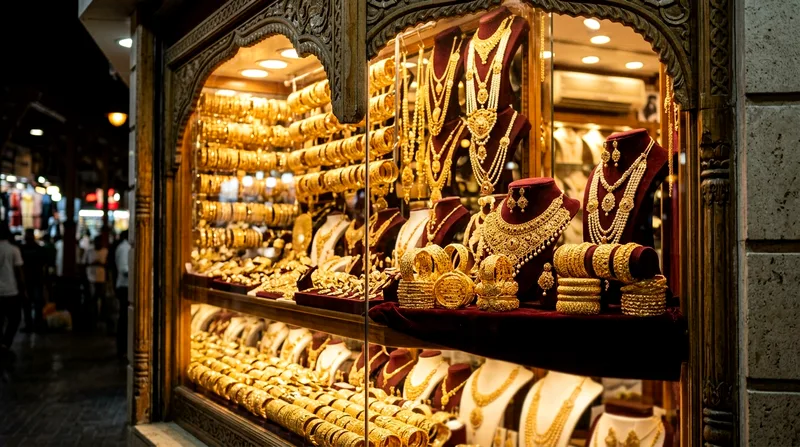
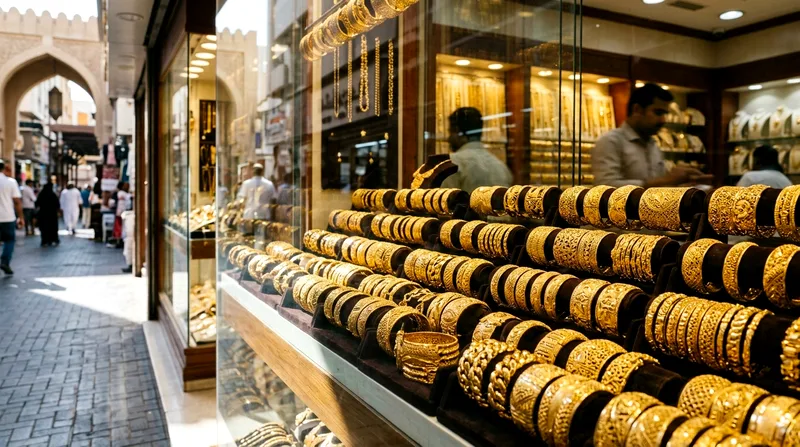
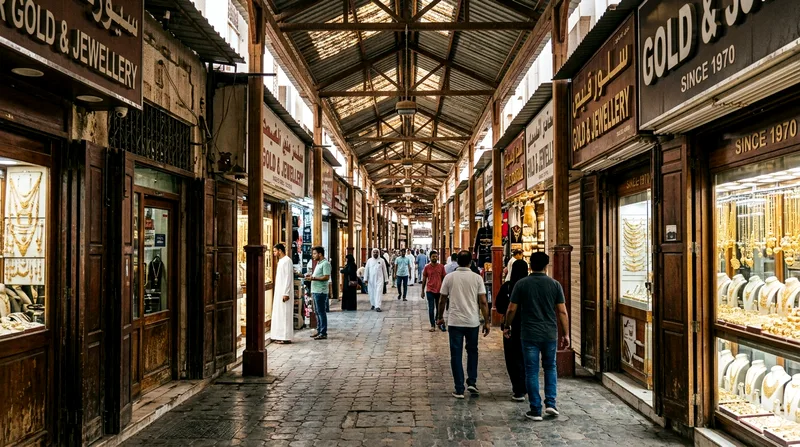
The Gold Souk itself sits in Deira, a covered market of roughly 300 to 400 shops arranged along a few interconnected lanes just off Sikkat Al Khail Street. It's compact — you can walk the whole thing in fifteen minutes if you're not stopping — but the density of shops, the lack of clear signage in English for pricing, and the sales pressure from shopkeepers trip up a lot of first-timers. That's the actual case for a guide: not navigation, since the souk is small, but context on gold purity (21K and 22K are standard in the Gulf, differing from the 18K common in Europe) and a buffer against overpaying.
===SUBSECECTION_PLACEHOLDER===
What guided tours include
Tours booked through platforms like Viator, GetYourGuide, or Project Expedition typically run two to three hours and bundle the Gold Souk with the Spice Souk and sometimes a short abra ride across the creek — a boat crossing that costs one dirham if you did it yourself. Expect a guide who explains the daily gold rate (posted in shops and tied to international spot prices), making fees charged per gram, and the difference between machine-made and handmade pieces. Some itineraries, including certain Big Bus Tours add-ons, fold this into a wider Old Dubai loop covering Al Fahidi. Group sizes vary, but expect anywhere from 4 to 15 people, which limits how much individual haggling support you actually get per person.
Benefits of going solo
Going without a guide means you set the pace entirely. If you want to spend forty minutes comparing bangles in three shops, nobody is waiting on you. You also avoid the slight awkwardness of haggling in front of a group, which some shopkeepers read as a performance and resist more than they would one-on-one. The real advantage is financial: you're not paying a tour fee (commonly $15–$40 depending on inclusions and platform) for something you can do for free, and you keep full control of your budget since no guide is nudging you toward partner shops that may pay referral commissions.
Time, Cost, and Effort Breakdown
The two approaches diverge sharply once you put numbers next to them, which is really the heart of this decision.
A guided Gold Souk tour costs more but trims decision-making time, while going solo is cheaper but demands more homework on pricing and haggling.
Dubai Gold Souk tour vs. independent visit: cost, time, and effort compared
| Option | Typical cost (USD) | Time needed | Haggling support | Best for |
|---|---|---|---|---|
| Shared guided tour | $15–$45 | 2–3 hours | Group-level tips | First-time visitors, families |
| Private guided tour | $60–$100+ | 2–3 hours | One-on-one coaching | Couples, seniors wanting ease |
| Independent visit | $7–$15 (transport only) | 1–1.5 hours | None, self-taught | Budget and experienced travelers |
| Big Bus-style combo tour | $40–$70 | Half-day | Minimal, scripted stops | World travelers combining sights |
| Self-guided + Creek abra | $8–$18 | 1.5–2 hours | None | Solo travelers, boat tour lovers |
Figures approximate as of 2025; confirm current prices and inclusions before booking.
Tour duration and pricing
Most bookable Gold Souk tours listed on Viator, GetYourGuide, or Expedia run 2–3 hours and are priced from roughly $15 to $45 per person depending on group size, inclusions (creek crossing, Spice Souk, hotel pickup), and whether it's private or shared. Private tours cost more — sometimes $60–$100+ — but give you a guide's full attention for haggling. Reviews on TripAdvisor for these tours tend to praise the historical context and gold-grading explanations more than any discount secured, which tells you where the real value sits. Always check current prices and exact inclusions when booking, since operators adjust both seasonally.
Independent exploration costs
Solo, your only costs are transport and whatever gold or souvenirs you buy. A taxi to Deira from Downtown Dubai runs about 25–40 AED (roughly $7–$11); the Dubai Metro to Al Ras or Baniyas Square stations costs a few dirhams and drops you a 5–10 minute walk away. Factor in an hour to ninety minutes for a relaxed browse, longer if you intend to haggle seriously across multiple shops. The time cost is actually higher solo if you're inexperienced — you'll spend longer figuring out fair prices than a guide would take explaining them upfront.
Haggling and Underrated spots Advantage
This is where the guided-versus-solo debate gets genuinely interesting, because the answer isn't as one-sided as tour marketing suggests.
Negotiation tactics for solo travelers
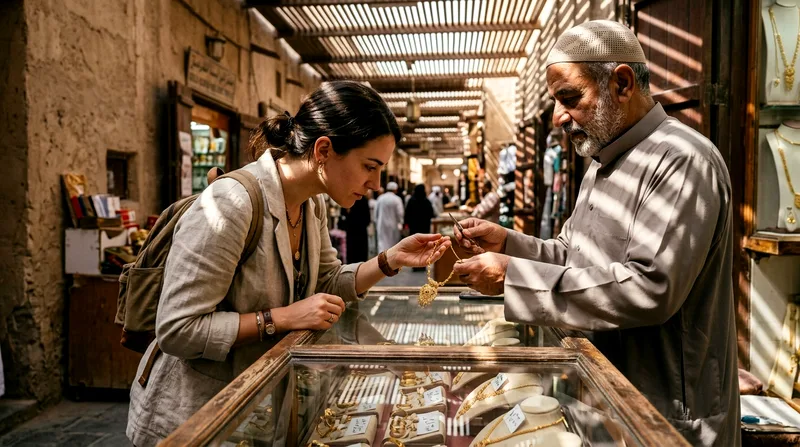
Dubai Gold Souk haggling works differently than a carpet bazaar in Marrakech — gold is priced by weight against the daily rate, so your negotiating room is really on the making charge, not the metal itself. Check the day's gold rate before you go (posted at Dubai Gold & Jewellery Group's site or just ask at the first shop, since they're legally required to be transparent about it), then counter the making charge by 20–30% below the initial quote. Visit at least three shops before committing — prices for similar pieces can vary by 10–15% block to block. Avoid the shops with aggressive callers right at the entrance; the better margins tend to be a few rows deeper where foot traffic is lower.
Lesser-known shops guides reveal
A decent local guide earns their fee here. They'll often steer you past the big-name storefronts toward smaller family-run shops a lane or two back, where overhead is lower and making charges tend to be more negotiable. Some guides also point out workshops where you can watch pieces being finished, or antique gold dealers dealing in estate pieces rather than new stock — these rarely show up on TripAdvisor because they don't pay for visibility. The trade-off: a guide may also have informal arrangements with specific shops, so treat enthusiastic recommendations with mild skepticism and still compare prices yourself.
Who Should Choose Each Option
Neither option is objectively better — it depends entirely on your travel profile, which is why this decision deserves more thought than "guided tours are safer."
Best for first-time visitors
Families with children, senior travelers who prefer not to navigate unfamiliar transport, and solo travelers visiting the Gulf for the first time generally get more value from a guided tour. You get the gold-purity education, a buffer against overpaying, and usually a tidy combination with the Spice Souk and a creek crossing in one outing — useful if your Dubai itinerary is already packed with Burj Khalifa or desert safari bookings and you don't want to burn a half-day figuring out Deira on your own.
Best for experienced travelers
If you've haggled in Marrakech, Istanbul's Grand Bazaar, or even Muscat's Mutrah Souk, you already have the instincts the Gold Souk rewards. Couples and world travelers comfortable with public transport will find the metro-plus-walk combination trivial, and skipping the tour fee means that money goes toward an actual purchase instead. Experienced travelers also tend to prefer the freedom to linger at Al Fahidi District afterward or extend into Bur Dubai's textile souk, routes a fixed-itinerary tour won't accommodate.
Final Verdict: Is a Tour Worth It?
Choose a guided tour for convenience and insider knowledge, or go solo to save money and explore at your own pace — but the calculus shifts depending on where else you're traveling in the region. If you've already done Muscat's souks or Sharjah's heritage area, Dubai's Gold Souk will feel familiar enough to handle alone. If this is your only Gulf stop and you're also squeezing in Abu Dhabi or Ras Al Khaimah on the same trip, a bundled Old Dubai tour saves real logistical effort.
One caution regardless of which route you pick: be wary of unsolicited "helpers" near the souk entrance offering to walk you to a "better" shop — this is a mild but persistent scam where they collect a commission and the prices are inflated to cover it. Politely decline and keep walking; legitimate shop staff don't need to recruit you from the street. Dress modestly, as this is a working market in a traditional district, not a mall, and expect it to be busiest between 6 and 10 PM when temperatures drop and local shoppers turn out alongside tourists — arriving right at opening around 10 AM gets you quieter alleys and less sales pressure either way.
Frequently asked questions
Is a guided Gold Souk tour worth the cost?
For first-time visitors, yes — the $15–$45 typical cost buys context on gold grading and pricing that otherwise takes an hour of trial and error to learn. If you've shopped in similar markets before, you're mostly paying for convenience rather than necessity.
How long does a Gold Souk tour take?
Most guided tours run 2–3 hours, often bundled with the Spice Souk and a Dubai Creek abra crossing. Visiting independently and briskly takes about an hour; a relaxed solo browse with haggling across several shops runs closer to 90 minutes.
Can I haggle at the Gold Souk alone?
Yes, and it's straightforward once you understand gold is priced by weight plus a making charge — the making charge is your real negotiating room, typically 20–30% below the first quote. Check the daily gold rate before entering so you're not negotiating blind.
What underrated spots do guides show you?
Experienced guides often point you toward smaller family-run shops a lane or two off the main walkway, where making charges are more flexible, plus the occasional antique gold dealer selling estate pieces rather than new stock. Cross-check any strong recommendation against at least one other shop's pricing.
Is gold cheaper at the Gold Souk than elsewhere?
Dubai has no sales tax on gold and competitive making charges due to shop density, so prices are generally lower than in much of Europe. It's comparable to or slightly better than other Gulf markets like Muscat's Mutrah Souk, though the metal cost itself tracks the same global spot price everywhere.