Dubai abra ride guide: Creek routes, fares, boarding stations, and how to pair the crossing with souk visits and dhow cruises.
What Is an Abra Ride?
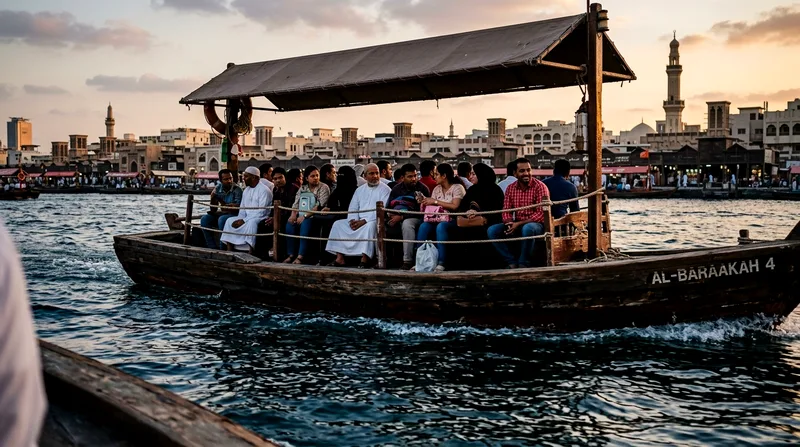
An abra is a small wooden ferry, usually seating 20 to 25 people on narrow benches, that has carried passengers across Dubai Creek since long before the city had bridges or a metro. The word itself comes from Arabic and simply means "to cross." Today it's the oldest form of public transport still running in Dubai, operated under the Roads and Transport Authority (RTA) alongside the city's buses and metro lines — not a tourist prop, even though tourists make up a good share of the riders now.
What makes the abra ride worth your time isn't the scenery alone — it's that you're sharing a boat with Deira shopkeepers heading to work and Bur Dubai residents doing their grocery run. Compare that to a Burj Khalifa observation deck ticket or a Dubai Fountain show, both polished, pre-packaged experiences. The abra is the opposite: unscripted, slightly chaotic at rush hour, and genuinely cheap. If you want a snapshot of pre-skyscraper Dubai, this five-minute ride gives you more of it than most paid heritage tours.
Traditional wooden boat design
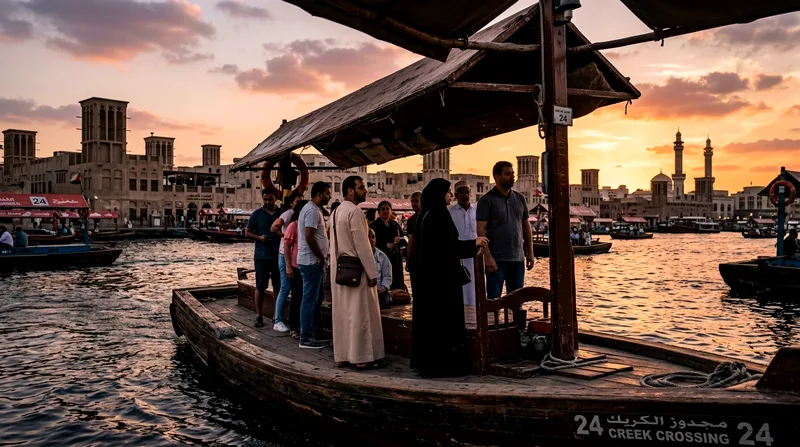
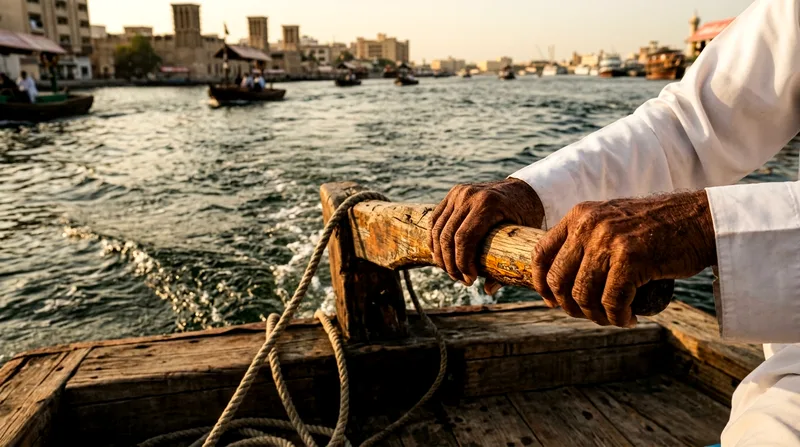
The modern abra keeps the original flat-bottomed, open-air design — a long wooden hull with a canopy roof for shade, bench seating along both sides, and a small outboard motor at the rear (older versions used oars or small diesel engines). There's no glass, no air conditioning, and no safety briefing beyond a crew member waving you to a seat. You sit low, almost at water level, which is actually the best part: you get a sightline straight across the Creek that no elevated cruise boat offers. Expect wooden benches that can feel hard after a longer ride, and no shelter from rain if the rare winter shower hits.
Cultural and historical significance
Before Dubai had any bridge over the Creek, the abra was the only way to move between the trading settlements of Deira and Bur Dubai — the same waterway that built Dubai's pearling and textile trade with India, Iran, and East Africa. Pearl divers, gold traders, and spice merchants all used some version of this crossing for generations. The RTA has kept the fare deliberately low and the routes unchanged for exactly this reason: it's treated as living heritage, not a museum piece. That's a genuine point of difference from Abu Dhabi or Doha, neither of which has preserved an equivalent working ferry culture at this scale.
Abra Routes and Stations
There are two main abra stations most visitors use: Bur Dubai Abra Station, near the Textile Souk, and Deira Old Souk Abra Station, across the water near the Gold Souk and spice market. These two stations handle the busiest and most useful crossing for tourists. There are a few other stations further along the Creek, but they're used mainly by commuters and rarely by sightseers, so don't expect tourist infrastructure there — no English signage, no ticket counters, just locals and routine.
Boats run continuously rather than on a fixed timetable; one simply leaves once it's reasonably full, which in practice means a wait of anywhere from one to ten minutes. That's a real contrast to Dubai's metro, which runs on a published schedule, or a scheduled dhow dinner cruise, which has a fixed departure time. If you need predictability, the abra isn't it — but you'll rarely wait long during daylight hours.
The standard shared abra crossing between Bur Dubai and Deira is the cheapest and fastest way to cross Dubai Creek, while longer guided or private options cost more but add comfort and commentary.
Dubai abra ride options compared: routes, duration and typical cost
| Option | Duration | Typical Cost | Booking Method | Best For |
|---|---|---|---|---|
| Shared station-to-station abra | 5-10 min | Approx. AED 1 | Pay crew on board, cash | Budget travelers, quick souk hop |
| Private abra hire | 15-30 min | Higher, per boat | Negotiate at station | Couples, small groups wanting privacy |
| Guided heritage abra tour | 30-45 min | Mid-range, per person | GetYourGuide, Trip.com | Travelers wanting history commentary |
| Dhow dinner cruise (bundled) | 1.5-2 hrs | Highest, per person | Advance booking online | Families, special occasions |
| Dubai Creek walk via bridge | 20-30 min | Free | No booking needed | Those avoiding boats entirely |
Figures as of 2024; fares and tour prices vary by season and operator, so confirm current rates before booking.
Dubai Creek main crossing
The standard tourist crossing runs between Bur Dubai Abra Station and Deira Old Souk Abra Station, directly opposite each other across the narrowest useful stretch of the Creek. This is also the route most heritage boat tour guides recommend as a standalone activity, separate from any paid cruise. It's short, cheap, and gets you from the Textile Souk side to the Gold Souk side without the 15-20 minute walk around via Al Maktoum Bridge or Al Shindagha tunnel.
Journey duration and landmarks
The crossing itself takes roughly 5 to 10 minutes, depending on Creek traffic and how many dhows are moored along the wharfage that day. Along the way you'll pass working cargo dhows stacked with goods headed for Iran and Somalia — not staged, just part of the daily loading routine — plus a clear view down the Creek toward the older low-rise Deira skyline. It's a modest view compared to the Burj Khalifa panorama you'd get from a Creek Harbour vantage point, but that's the point: this is old Dubai, not new Dubai.
Pricing, Payment and Access
Abra ride pricing is deliberately simple and has stayed low for years as a matter of public policy — the RTA treats it as subsidized public transport, similar to a bus fare, rather than a tourist attraction with market pricing. You'll pay in cash, in small denominations, directly to a crew member on board rather than at a ticket counter beforehand. There's no app-based booking for the standard RTA crossing, which surprises some travelers used to tapping a Nol card for the metro.
If you want a longer, guided abra experience — say a 30 to 45 minute loop around the Creek with commentary — that's a different product, usually booked in advance through platforms like GetYourGuide, Trip.com, or found reviewed on TripAdvisor, and priced closer to a short cruise than a ferry hop. Don't confuse the two: the plain station-to-station crossing is the cheap, authentic version, and the extended tour is a paid add-on sold separately. Compare current abra heritage tours and prices before you book if you want the longer version — operators and exact rates change seasonally.
Fare structure and payment methods
The standard one-way station-to-station fare is low — around AED 1 for the shared ride where the boat fills with other passengers, which is the version locals use daily. Some stations also offer a private hire option where you pay for the whole boat, which costs considerably more and makes sense mainly for a group wanting a slower, uninterrupted ride without sharing with commuters. Always carry small cash notes; crew members rarely carry much change for large bills.
How to board and navigate stations
At both Bur Dubai and Deira Old Souk stations, you walk down to a low floating platform, pay the crew member directly, and step onto the boat — there's no turnstile, no printed ticket, no reserved seat. Boats depart once reasonably full, so don't expect a strict queue system; it's more a loose cluster of waiting passengers. Watch your step on the platform edge, especially at high tide or after rain, since the wooden boards can be uneven and slightly slick.
Combining Abra Rides With Souk Visits
The abra's real value for visitors is logistical as much as cultural — it's the fastest way to link Dubai's two major souk districts. Treat it as a connector, not a standalone attraction, and your Creek-side morning or evening gets a lot more efficient.
Gold Souk and Meena Bazaar access
From Deira Old Souk Abra Station it's a five-minute walk to the Gold Souk, where hundreds of shopfronts display gold, diamonds, and gemstones — prices here are generally negotiable and tied to the daily gold rate, so don't expect fixed tags to be final. On the Bur Dubai side, a similarly short walk gets you to Meena Bazaar, known for textiles, saris, and budget tailoring rather than jewelry. Doing both in one outing, linked by the abra, is far more efficient than taking a taxi around via the bridge, which in daytime traffic can take 20 minutes or more for a crossing that takes the boat five.
Dhow cruise integration options
Some heritage boat tour packages bundle an abra crossing with a later dhow dinner cruise along the Creek or Dubai Marina, giving you both the working ferry experience and the leisure cruise experience in one booking. These bundled tours are worth considering if you're short on time, though they cost more than doing the abra crossing independently and then booking a separate dhow cruise. If budget matters more than convenience, do the abra crossing on your own for next to nothing, then compare dhow cruise options separately — you'll likely save money against the bundled rate.
Best Times and Local Tips
Timing an abra ride well makes a real difference, mostly because Dubai's climate and light change so sharply across the day and the year.
Seasonal weather and crowds
November through March is the comfortable window, with daytime temperatures generally in the low-to-mid 20s°C and pleasant evenings — this is also when cruise ships and European travelers flood the Creek area, so stations get busier, especially around sunset. June through September pushes past 40°C by midday, which makes the shaded but open-air abra genuinely uncomfortable; an early morning or after-dark crossing works far better than midday in that stretch. Unlike an indoor attraction such as the Dubai Mall aquarium, there's no climate control here to fall back on.
Photography and safety considerations
Sunset crossings, roughly 30 to 45 minutes before the sun drops, give you the best light on the dhow wharfage and the Deira skyline, and this is when most photographers show up — expect to share bench space and jostle slightly for a clear shot. Life jackets aren't routinely worn on the short crossing, which some travelers find surprising; if that concerns you, ask the crew before boarding, though most families ride without issue. Keep phones and bags zipped — boats rock a little when passengers board and disembark, and the Creek water isn't somewhere you want to drop a camera.
Frequently asked questions
How much does an abra ride cost in Dubai?
The standard shared crossing between Bur Dubai and Deira Old Souk stations costs roughly AED 1 per person, paid in cash to the crew on board. Private hire of a whole boat costs considerably more and is negotiated at the station rather than fixed. Guided heritage tours booked through platforms like GetYourGuide or Trip.com are priced separately and cost more than the basic crossing.
What is an abra boat and why is it important?
An abra is a traditional wooden ferry that has crossed Dubai Creek for generations, long before any bridge existed between Deira and Bur Dubai. It's still run by Dubai's RTA as working public transport, not a staged tourist attraction, which is exactly why it feels more authentic than a paid Creek cruise.
Where can I catch an abra in Dubai?
The two main tourist-friendly stations are Bur Dubai Abra Station, near the Textile Souk, and Deira Old Souk Abra Station, near the Gold Souk and spice market. Both are a short walk from Meena Bazaar and major souk areas, and boats depart continuously rather than on a fixed schedule.
Can I combine an abra ride with a dhow cruise?
Yes — some tour operators bundle an abra crossing with a later dhow dinner cruise on the Creek or Marina as a single package. It costs more than doing each separately, but saves time if you want both experiences in one booking rather than arranging them yourself.
What is the best time to take an abra ride?
November to March offers the most comfortable weather, while summer months (June-September) push past 40°C, making an early morning or after-dark crossing far more bearable than midday. Sunset crossings also give the best light over the dhow wharfage and Deira skyline for photos.