Planning an Al Fahidi neighbourhood tour Dubai? Compare guided vs self-guided options, museums, wind-tower architecture, timing and booking tips.
What Is Al Fahidi and Why Visit
Al Fahidi Historical Neighbourhood sits on the Bur Dubai side of Dubai Creek, a cluster of restored coral-and-gypsum buildings that once housed Dubai's merchant families. Locals still call it Al Bastakiya, after the traders from Bastak in southern Iran who settled here in the late 1800s and early 1900s. It's one of the few parts of the city where you can walk for twenty minutes without seeing a glass tower, which is precisely the point.
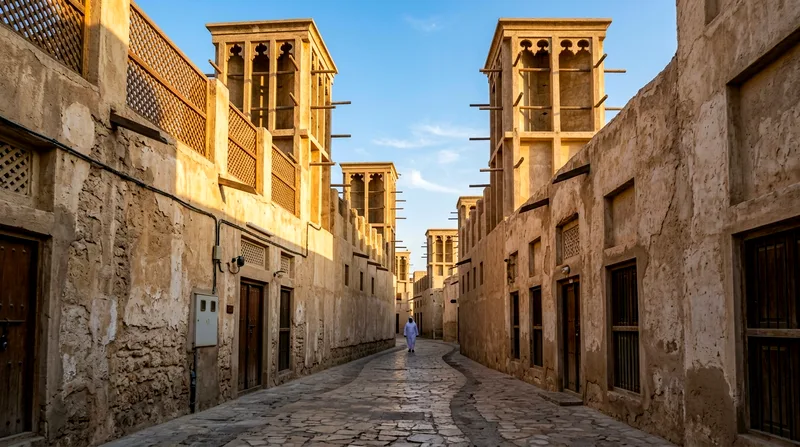
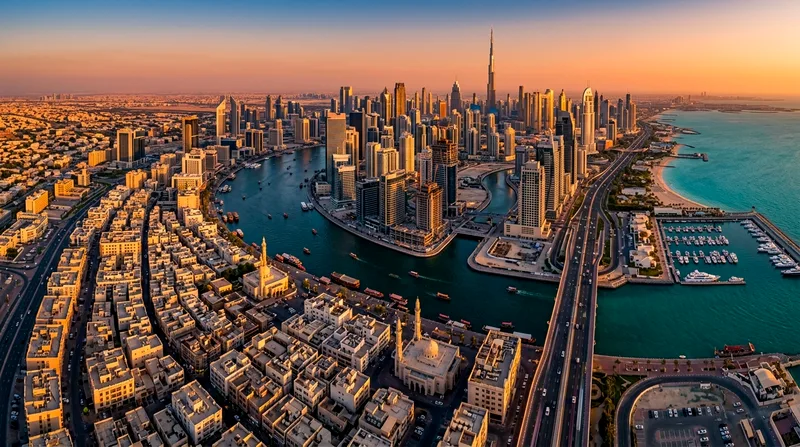
If you've been to Dubai Mall or the Burj Khalifa and want to see what the city looked like before oil money arrived, this is the place. It's a genuine contrast to Downtown Dubai and Dubai Marina — low buildings, shaded lanes, wind towers instead of air conditioning units. Compared to similar heritage pockets in the region, like Sharjah's Heart of Sharjah district or the old quarters of Muscat, Al Fahidi is smaller and more walkable, which makes it a realistic half-day stop rather than a full excursion.
I'd argue it's one of the few "free" things to do in Dubai that actually delivers on the promise of authenticity. You don't need a ticket to wander the alleys themselves — only the museums inside charge entry. That's a meaningful difference from, say, Qasr Al Hosn in Abu Dhabi, where the site itself has defined opening hours and sometimes an entry fee for special exhibitions.
Historical significance and heritage value
The neighbourhood dates largely from the 1890s to 1930s, built by Persian merchant families trading pearls, textiles and timber along the creek. Dubai Culture, the government body responsible for heritage sites, restored much of the district in the 2000s after years of neglect, and it now holds protected status. Roughly 50 buildings survive in some form, though not all are open to the public — many house cafes, galleries or small offices rather than museums. The restoration isn't perfect; some buildings feel slightly over-polished, with fresh plaster that looks more like a film set than a lived-in quarter. That's a fair criticism, but it doesn't take away from the layout, which is original.
Authentic old Dubai experience
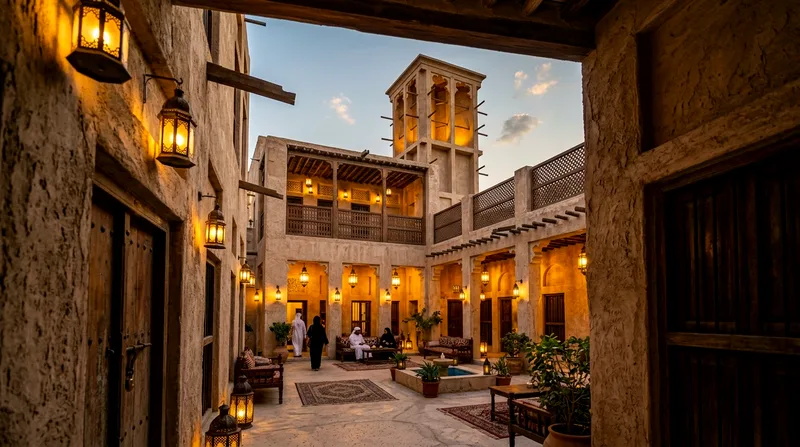
What makes Al Fahidi feel real rather than staged is the scale — ceilings are low, lanes are barely wide enough for two people to pass, and courtyards open up unexpectedly behind plain doorways. Compare that to the Heritage Village in Abu Dhabi, which is a reconstruction built for tourists; Al Fahidi is the actual historic fabric of the city, just repaired. You'll hear construction noise from nearby high-rises in places, which breaks the illusion a bit, but the core blocks near the Creek are quiet enough to feel like a different decade.
Guided Tours vs Self-Guided Exploration
This is the real decision point for anyone researching an Al Fahidi neighbourhood tour Dubai option. There's no single "correct" answer — it depends on how much context you want and how much time you have.
A self-guided Al Fahidi walk costs almost nothing and takes about an hour, while a guided tour adds historical context and souk/abra add-ons at a higher price and on a fixed schedule.
Al Fahidi neighbourhood tour Dubai: guided vs self-guided comparison
| Option | Typical Duration | Cost Level | Context Provided | Best For |
|---|---|---|---|---|
| Self-guided walk | 60-90 min | Free (museum fees extra) | Low unless you read up beforehand | Solo travelers, couples, repeat visitors |
| Small-group guided tour | 90 min-2 hrs | Mid | High, with local guide | First-time visitors, families |
| Bundled heritage tour (souks + abra) | 2-3 hrs | Mid to high | High, broader scope | World travelers short on time |
| Cultural Centre session (SMCCU) | 60-90 min | Low to mid | Very high, Q&A format | Travelers wanting cultural depth |
| Private guide/photography tour | 1.5-2.5 hrs | High | High, tailored pace | Couples, photography enthusiasts |
Figures as of 2025; durations and costs vary by provider — compare current prices when booking.
Benefits of guided tours
A guided walking tour, typically 90 minutes to two hours, gets you a local or trained guide explaining wind-tower mechanics, the Persian trading history, and pointing out details you'd otherwise walk past — carved wooden doors, specific merchant family houses, the difference between a barjeel (wind tower) built for airflow versus one built mostly for status. Group tours booked through platforms like Viator or GetYourGuide often bundle Al Fahidi with a Gold Souk walk and an abra crossing, which is efficient if you're short on time. The trade-off: you're on someone else's schedule, and group sizes can run to 15-20 people in high season, which dilutes the quiet-alley experience that makes the neighbourhood appealing in the first place. If you want depth without the crowd, ask whether a private or small-group option is available before booking.
Self-guided walking route tips
Walking it alone costs nothing beyond museum entry fees, and the district is small enough — roughly 300 metres by 300 metres — that getting lost isn't really a risk. Start at the Al Fahidi Fort end near the Dubai Museum, work through the lattice of lanes toward the Creek, and finish at the Al Seef waterfront promenade. Budget 60-90 minutes if you're just walking and photographing, longer if you stop at a museum or café. The one thing self-guided visitors miss is context — you'll see a wind tower but not necessarily understand why it's angled the way it is, so a short visit to the Coffee Museum or Coins Museum helps fill that gap cheaply.
Key Museums and Cultural Attractions
Al Fahidi punches above its size for small museums. None of them take more than 30-45 minutes, so you can realistically combine two or three in one visit without it becoming a museum marathon.
Museums and galleries overview
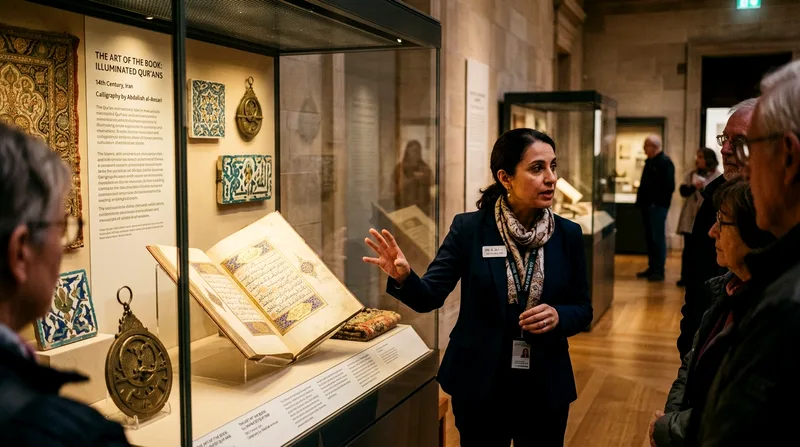
The Dubai Museum, inside Al Fahidi Fort, is the city's oldest building, dating to around 1787, though it has been closed for extensive renovation in recent years — check current status before planning around it. The Sheikh Mohammed Centre for Cultural Understanding runs cultural breakfasts, Arabic-language sessions and guided walks specifically aimed at visitors wanting respectful cross-cultural context; book ahead since sessions are capped and fill up. Smaller stops include the Coffee Museum, the Coins Museum, and the Al Fahidi galleries showing contemporary Emirati art — these are low-cost, often under AED 20-30 entry, and far less crowded than anything near Downtown Dubai.
Gold Souk and Spice Souk
Cross the Creek by abra and you're at the Gold Souk and Spice Souk in Deira, a natural extension of an Al Fahidi visit rather than a separate trip. The Gold Souk is a covered market with hundreds of jewellery stalls — browsing is free, buying requires some haggling confidence, and prices move with the daily gold rate, so don't expect fixed tags. The Spice Souk nearby is smaller and more atmospheric, sacks of saffron, dried limes and frankincense stacked in open-fronted shops. It's touristy, yes, but less sanitised than the souks inside Dubai Mall, and the walk between the two takes under 10 minutes.
Wind-Tower Architecture and Photography
The wind towers, or barjeel, are the reason most photographers come to Al Fahidi, and they're genuinely unlike anything else in Dubai's modern skyline.
Architectural features and design
A barjeel is a square wooden tower rising above a building's roofline, open on four sides with diagonal internal partitions that catch wind from any direction and funnel it down into the rooms below — a pre-electricity cooling system that predates air conditioning by over a century. Built mostly from teak imported via trade routes with India and East Africa, the lattice work also filters harsh sunlight. You'll see dozens of them across Al Fahidi's rooftops, varying in height and the density of their wooden slats; some are purely decorative restorations, others functional. For comparison, you won't find this architecture preserved at this density anywhere else in the UAE — Sharjah has scattered examples, but nothing as concentrated.
Best angles and lighting conditions
Early morning, before 9am, gives you soft light and near-empty lanes — the single best window for photography. Midday sun bleaches the coral-coloured walls and creates harsh shadow lines under the towers, which isn't flattering. Late afternoon, from around 4pm, brings warmer tones and longer shadows that outline the wind towers nicely against the sky. The courtyard of the Arabian Tea House is a reliable spot for a relaxed shot with greenery and traditional seating, while the rooftop cafés near Al Seef give you an elevated view back across the wind-tower rooftops toward the Creek.
Best Time to Visit and Logistics
Timing matters more here than at most Dubai attractions, because there's very little shade relief once the sun is high and almost no air conditioning indoors apart from the museums.
Seasonal weather considerations
November through March is the realistic window, with daytime temperatures in the low-to-mid 20s Celsius and enough comfort to walk for an hour or two without needing constant breaks. From June through September, midday heat regularly exceeds 40°C, and the narrow lanes trap heat rather than cooling it — walking the district at 1pm in August is genuinely unpleasant and arguably unsafe for older travelers or young children. If you're visiting in summer, go right after sunrise or after 5pm, and treat it as a 30-minute visit, not a leisurely afternoon.
Getting there and navigation
The nearest Dubai Metro stop is Al Fahidi Station on the Green Line, about a 10-minute walk from the neighbourhood's edge. Taxis are cheap and simple — expect a short flat fare from most Bur Dubai or Downtown hotels. There's no single "entrance," so don't worry about finding a gate; you simply walk in from Al Fahidi Street. Phone signal and offline maps both work fine for navigation, though paper maps are posted at a few junctions if you prefer to go without a phone out.
Booking, Tickets, and Nearby Add-Ons
There's no admission fee for the neighbourhood itself — you only pay when you enter a specific museum or book a guided experience. That makes the "booking decision" really about how much structure and extra content you want layered on top of a free walk.
Tour operators and booking platforms
Search platforms like Viator and GetYourGuide list a range of Al Fahidi and old Dubai heritage tours, usually bundled with the Gold Souk, Spice Souk and an abra crossing, often running two to three hours total. Prices and exact itineraries change often enough that you should compare current tours and prices before booking rather than relying on a figure printed somewhere online. Read what's actually included — some listings bundle museum entry, others don't, and that gap can make a "cheap" tour cost more once you add tickets on site. If English isn't your first language, check the tour's listed languages; many Dubai heritage tours run primarily in English and Arabic, with fewer options in other European languages compared to, say, tours in Doha or Muscat aimed at a narrower cruise-ship crowd.
Abra rides and combined experiences
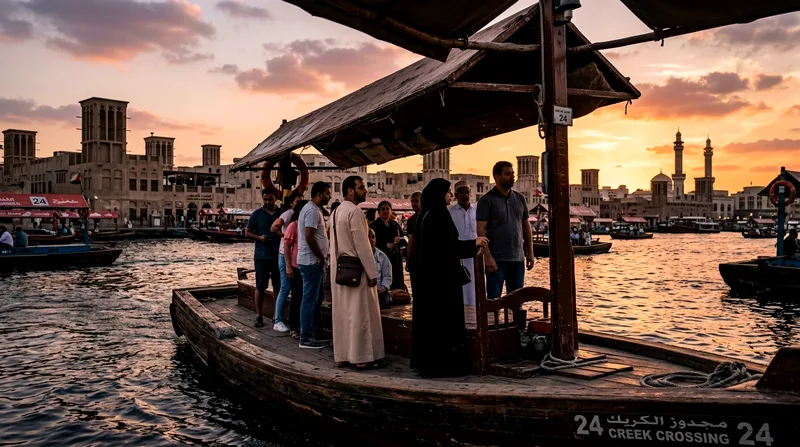
The traditional abra boats crossing Dubai Creek between Bur Dubai and Deira cost a small flat fare for the shared public version — a few dirhams, paid directly to the boatman — and take roughly 5-10 minutes. It's one of the best-value experiences in the whole city and pairs naturally with an Al Fahidi visit, since you can walk straight from the heritage district to the abra station. Private abra charters exist too, often marketed as sunset Creek cruises, and cost considerably more for a longer loop. If you've already got a Dubai Marina dinner cruise or a Burj Al Arab afternoon tea booked elsewhere in your trip, skip the private charter here and stick with the public abra — it's shorter, cheaper, and just as atmospheric.
Frequently asked questions
Is Al Fahidi Historical Neighbourhood worth visiting?
Yes, especially if you want contrast to Dubai's modern skyline. It's free to walk, takes about an hour, and shows wind-tower architecture you won't see at this density anywhere else in the UAE, including Sharjah or Ras Al Khaimah. Skip it only if you have under a day in Dubai and must prioritize Burj Khalifa or the Marina instead.
What is the best time to visit Al Fahidi?
Go between November and March, ideally before 9am or after 4pm, for comfortable walking temperatures and good photo light. Summer visits (June-September) are workable only in early morning or evening, since midday heat regularly tops 40°C with little shade in the lanes.
How long does an Al Fahidi tour take?
A self-guided walk takes 60-90 minutes. Guided tours typically run 90 minutes to two hours, and bundled itineraries that add the Gold Souk, Spice Souk and an abra ride across Dubai Creek can stretch to two or three hours total.
Can I take a self-guided tour of Al Fahidi?
Yes, and for most travelers it's the better value option. There's no entry gate or fee for the neighbourhood itself — you only pay for specific museums, like the Coffee Museum or Coins Museum, each costing a modest entry fee. Bring an offline map as backup, though signal is generally reliable.
How do I book an Al Fahidi neighbourhood tour?
Search Viator, GetYourGuide, or the Sheikh Mohammed Centre for Cultural Understanding directly for guided options, and compare current prices and inclusions before booking, since itineraries and museum entries vary by listing. For a no-booking option, simply walk in from Al Fahidi Metro Station and explore independently.