Compare luxury vs budget overnight desert safaris in Dubai. Stargazing, camel rides, BBQ dinner, camping tips and what to pack for desert nights.
Who Should Book an Overnight Desert Safari
A standard evening desert safari gets you back to your hotel by 9 or 10pm, dune bashing and a buffet dinner done in under six hours. An overnight desert safari in Dubai is a different proposition entirely — you're sleeping out there, which means a longer drive, a slower pace, and access to the sky and silence that day-trippers never get. If your itinerary only has room for one desert excursion, this is the version that actually earns the extra hours.
It suits people who want depth over speed. You get two sunsets' worth of light if you count the following dawn, a full night away from Dubai's skyline glow, and usually a far smaller group than the mass-market evening safaris that cram 20 Land Cruisers into one dune field at 6pm. The trade-off is obvious: you're committing six to eighteen hours depending on the package, not three or four, and you'll be roughing it to some degree even at the nicer camps.
Best for Adventure Seekers and Photographers
If you shoot landscapes or just want decent phone photos without a hundred other tourists in frame, staying overnight solves the biggest problem with day safaris: timing. Sunset dune shots on a standard tour are rushed, with everyone herded back into vehicles within 15 minutes. Overnight guests linger, shoot blue hour, then get the dunes again at sunrise before breakfast — usually with a fraction of the crowd, since most operators don't run morning activities for day-trippers. The Dubai Desert Conservation Reserve areas tend to have better light discipline (fewer competing vehicle headlights) than the open desert zones used by cheaper tours, which matters if night sky photography is the point of going.
Ideal for Couples and Small Groups
Couples get more out of this than families with young kids, mainly because of logistics — communal dinner seating, shared bathroom blocks at budget camps, and a late-night stargazing session that doesn't align well with a 7pm bedtime. Small groups of friends traveling together do well here too, since many camps price per tent rather than per person, so splitting a premium tent across three or four adults brings the luxury tier closer to budget-tier pricing per head. Solo travelers can book these too, though expect a single-occupancy supplement at most luxury camps — check that cost specifically before assuming the headline price applies to you.
Luxury vs Budget Camp Comparison
This is the decision that actually matters, more than which activities are bundled in, because activities are fairly standardized across the market. What separates a good overnight desert safari from a disappointing one is almost entirely about the camp itself — the tent, the toilets, and how far you are from other groups' noise.
Luxury camps buy you privacy, air conditioning and distance from crowds, while budget camps deliver the same core activities for a fraction of the cost with shared facilities.
Dubai overnight desert safari camp tiers compared: amenities, group size and who it suits
| Camp Tier | Sleeping Setup | Bathroom | Typical Group Size | Best For |
|---|---|---|---|---|
| Luxury | Private fixed tent, real bed | En-suite | Small, intimate | Couples, honeymooners, photographers |
| Mid-range | Private tent, shared block nearby | Shared, short walk | Medium | Families, small groups |
| Budget | Basic/shared tent | Shared central block | Large | Solo travelers, backpackers, budget groups |
Figures reflect typical market structures as of 2024-2025; always confirm exact tent type and bathroom access when booking.
Premium Tent Accommodations and Amenities
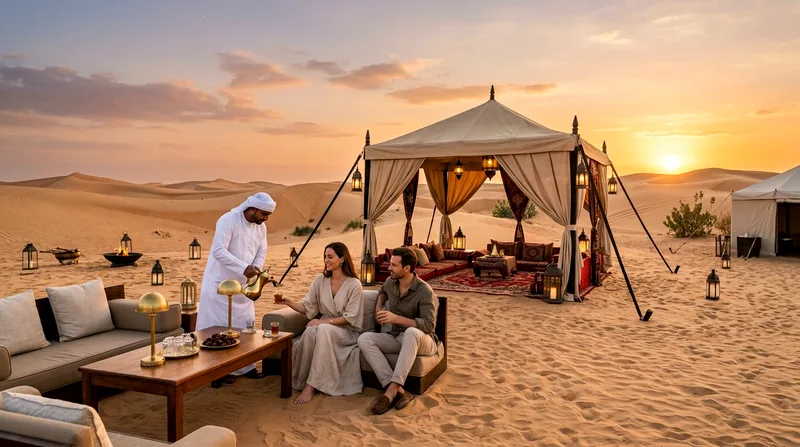
Luxury desert safari Dubai packages typically put you in a fixed canvas-and-timber tent with a proper bed frame, air conditioning (essential — desert nights swing from 35°C at sunset to under 15°C before dawn in winter, but the tents trap heat during the hotter shoulder months), an en-suite bathroom, and sometimes a private deck. These camps are usually smaller and set further from the main tourist dune-bashing corridor, which means less engine noise and generator hum after dark. Expect this tier to run several times the cost of a budget night, often quoted per tent for two rather than per person. The catch: fewer tents means fewer departure dates, so book at least 2-3 weeks ahead in peak season (November to February) if you want availability.
Standard Camps and Shared Facilities
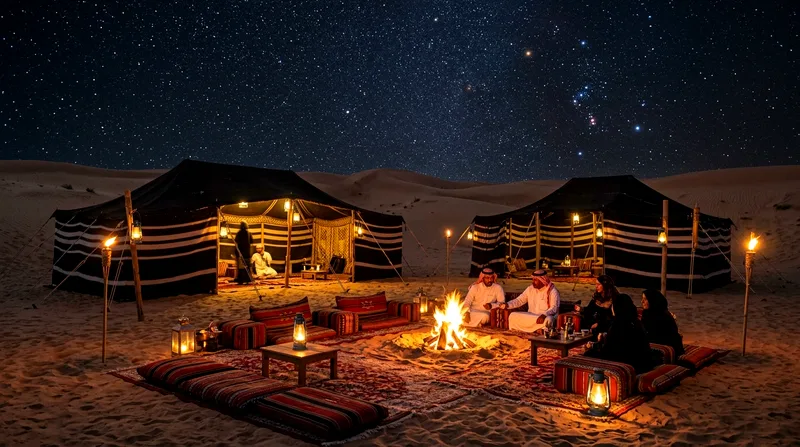
Budget desert camping Dubai tours put you in simpler tents — sometimes shared dormitory-style canvas structures, sometimes basic twin tents without attached bathrooms, relying on a central shower/toilet block instead. No air conditioning, usually just a fan or nothing at all, so winter nights (December-January) can get genuinely cold; bring layers regardless of what the brochure photo suggests. These camps, similar in setup to what you'd find around Al Khayma Camp-style operations, run a fraction of the luxury price and still deliver the core experience — dune bashing, camel ride, BBQ, stargazing — just without the private comforts. For solo travelers and groups on a budget, this tier is usually the better value; you're paying for the desert, not the mattress.
What's Included: Activities and Amenities
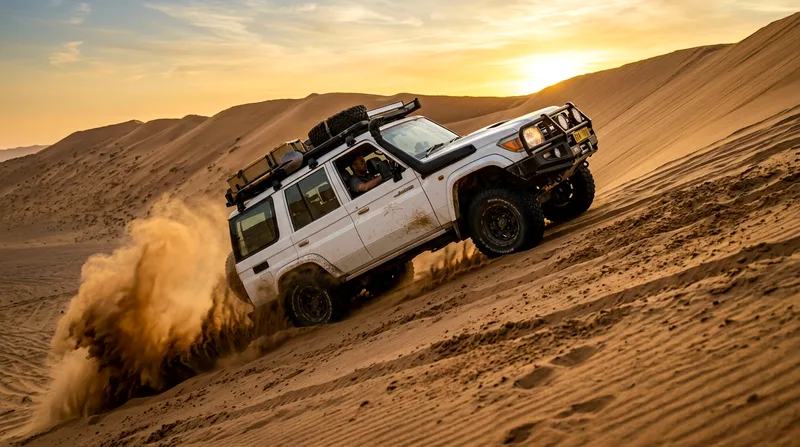
Most overnight desert safari itineraries follow a similar shape regardless of tier: afternoon hotel pickup, dune bashing en route, camp arrival before sunset, dinner and entertainment, sleep, sunrise, breakfast, drop-off. What varies is depth and quality within each stage, not the stage itself.
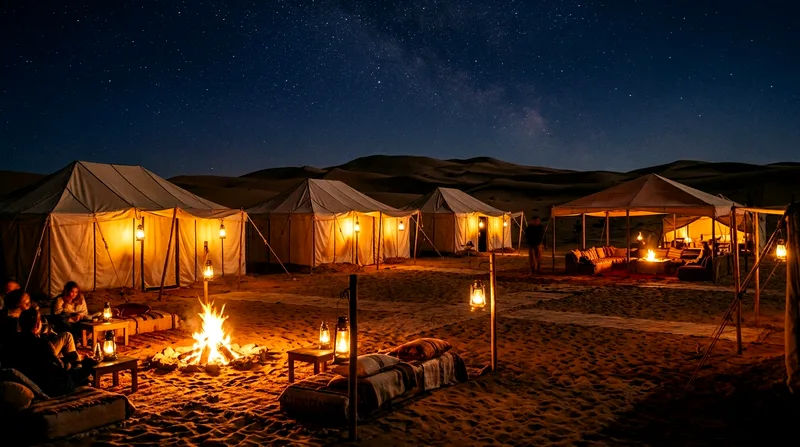
Dune Bashing, Camel Rides and Entertainment
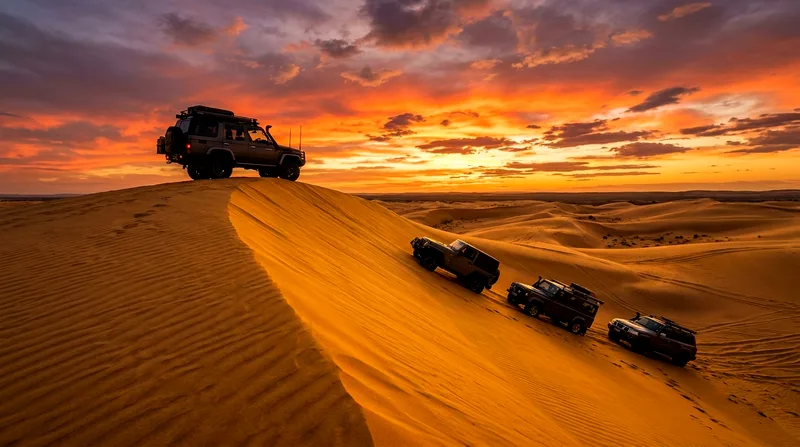
Dune bashing happens in 4WD vehicles — Land Cruisers almost universally, since they handle soft sand inclines better than lighter SUVs — for roughly 30-45 minutes before camp arrival. It's genuinely rough; if you're prone to car sickness, ask the driver to take it easier or sit in the front seat. Camel riding is usually a short, slow loop near camp, more photo opportunity than adventure, lasting 10-15 minutes. Evening entertainment typically includes a tanoura (folk dance) show and sometimes henna painting — standard across almost every tier, luxury or budget, so don't pay a premium expecting something more elaborate here.
BBQ Dinner, Breakfast and Stargazing
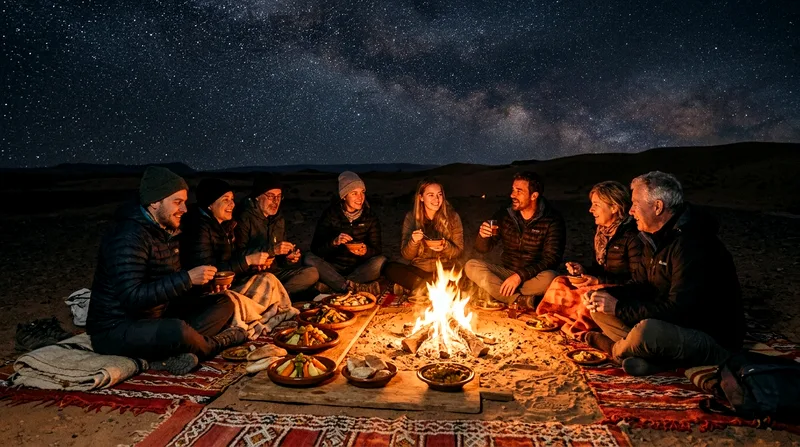
Dinner is a buffet-style BBQ — grilled meats, rice, salads, sometimes a vegetarian station — eaten communally under the open sky or a shared tent. Quality and variety scale with price; budget camps lean heavily on one or two meat options, luxury camps offer more range and sometimes a live grill station. Breakfast the next morning is lighter: flatbread, eggs, fruit, tea or coffee, served early since most camps clear out by 9-10am. Stargazing is usually informal — no telescope guaranteed unless the listing specifically says so — so if dark-sky viewing is your main reason for going, check inclusions for a telescope or guided astronomy session before booking rather than assuming it.
What to Pack and Prepare
Packing for an overnight desert camp trips people up because Dubai's daytime heat makes it hard to believe the night will turn cold. It does, especially between November and February.
Essential Clothing and Sun Protection
Bring layers: a light top for the warm afternoon dune-bashing session, and a jacket or fleece for after sunset when temperatures can drop into the low-to-mid teens Celsius in winter. Closed shoes help when walking on sand that holds daytime heat or, in winter, gets surprisingly cold after dark. Sun protection matters during the afternoon drive and camel ride — hat, sunglasses, SPF 30+ — even though you're arriving in late afternoon, UV exposure on open sand is intense. Women should pack a light scarf or shawl; it's not required at most camps but useful for sun, dust, and the evening chill alike.
Photography Gear and Personal Items
A phone tripod or small travel tripod makes a real difference for night sky shots — handheld long exposures won't work. Bring a power bank, since most budget camps have limited charging points and luxury camps may only offer outlets inside tents. Pack toiletries and a toothbrush regardless of tier; budget camps rarely supply them, and even luxury camps vary. Cash in small AED denominations is worth carrying for tips to camel handlers and camp staff — not mandatory, but customary. Leave valuables locked in your hotel room; desert camps don't typically offer secure in-room safes outside the luxury tier.
Booking Tips: Timing, Cancellation and Inclusions
Booking platforms like Viator and TripAdvisor list dozens of overnight desert safari options alongside reviews, and bundled city passes such as MyDubaiPass sometimes include a standard evening (not overnight) safari as part of a broader package — worth checking if you're already comparing multi-attraction passes, since it can affect whether a separate overnight booking makes sense for your trip.
Best Seasons for Stargazing Conditions
November through March gives the clearest, coolest nights and the best stargazing conditions — low humidity, minimal dust haze, comfortable sitting-outside temperatures once you've layered up. Summer months (June-September) push overnight lows into the high 20s°C with higher humidity and more atmospheric haze, which dulls star visibility even on cloudless nights, plus the daytime heat during transfer and dune bashing becomes genuinely punishing, often above 40°C. If stargazing is your priority, don't book a summer overnight safari expecting the same sky quality you'd see in January.
Group Size, Cancellation Policies and Transfers
Hotel pickup and drop-off is standard on almost every listing, but confirm the pickup window — some operators give a two-hour window rather than a fixed time, which can eat into your day if you're also trying to see the Burj Khalifa or Dubai Mall beforehand. Check cancellation policy terms before paying in full; many allow free cancellation up to 24 hours before departure, but overnight packages sometimes have stricter windows (48-72 hours) given the camp logistics involved. Group size matters too — a listing advertising "private" dune bashing but shared camp facilities is common, so read the fine print on whether the overnight stay itself is shared or exclusive. Compare current overnight desert safari tours and prices before you book, since availability and seasonal pricing shift month to month.
Frequently asked questions
What is included in an overnight desert safari package?
Typically: round-trip hotel transfer, 4WD dune bashing, camel riding, a BBQ buffet dinner, cultural entertainment (tanoura dance, sometimes henna), overnight tent accommodation, and breakfast the next morning. Extras like quad biking, sandboarding or a private telescope session are usually add-ons, not standard inclusions — check the listing carefully rather than assuming.
How much does an overnight desert safari cost in Dubai?
Pricing varies widely by camp tier, season and group size, with luxury private-tent packages costing several times more than budget shared-camp options. Rather than quoting a fixed figure that goes stale, compare current listings on booking platforms close to your travel dates — prices shift with season and demand, especially around winter weekends.
What should I pack for an overnight desert safari?
Layers for a cold night (jacket or fleece), closed shoes, sunscreen and sunglasses for the afternoon drive, a power bank, a small tripod if you want night-sky photos, and basic toiletries since most camps don't supply them. Leave valuables at your hotel — desert camps rarely have secure safes outside the luxury tier.
What time does the overnight safari start and end?
Most overnight safaris pick up guests mid-to-late afternoon, around 3-4pm, for the dune bashing drive and sunset camp arrival, then drop guests back at hotels the following morning between 9am and 11am after breakfast. Exact timing varies by operator and season, so confirm the pickup window when booking.
Is hotel pickup included in the tour?
Yes, almost all overnight desert safari listings include round-trip hotel pickup and drop-off within central Dubai as standard. If you're staying outside the main hotel zones, double-check coverage — some operators charge a supplement or exclude far-flung areas like certain parts of Dubai Marina or Jumeirah Village.