Book Museum of the Future Dubai tickets online. Compare prices, time slots, floor exhibits, and find out if it's worth visiting for families and adults.
What Is Museum of the Future Dubai
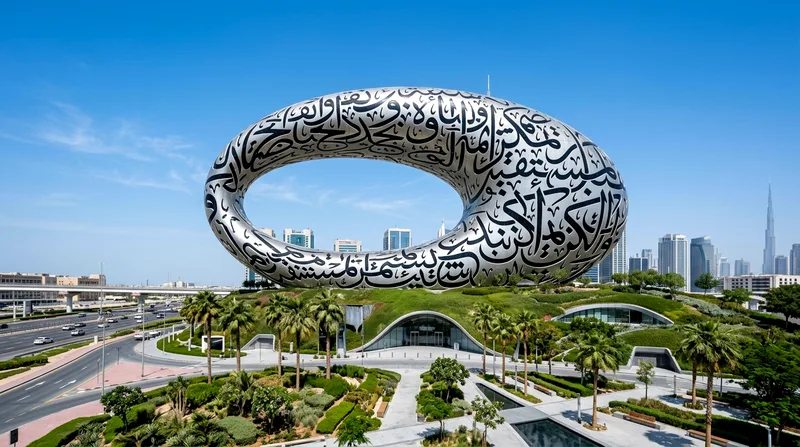
Museum of the Future Dubai is the oval-shaped, calligraphy-wrapped building that's become one of the most photographed structures on Sheikh Zayed Road — and that's before anyone even steps inside. Opened in 2022, it's not a museum in the traditional sense of glass cases and dated placards. It's closer to a themed experience built around future-facing ideas: climate tech, space travel, biotech, and wellness, spread across several themed floors with heavy use of projection, sound, and interactive installations.
If you're picturing something like the Louvre Abu Dhabi or a historical site in Al Ain, recalibrate. There's no permanent collection of artifacts here. It's designed experience over education — more immersive theater than archive. That's a deliberate trade-off, and it means some visitors walk out thrilled while others feel like they paid a premium for an elaborate walk-through with limited depth.
Location-wise, it sits near Emirates Towers on Sheikh Zayed Road, making it easy to combine with a Dubai Mall visit or a Burj Khalifa ticket on the same day. Unlike attractions in Fujairah or Ras Al Khaimah that require a half-day drive, this one slots neatly into a half-day plan within the city. Expect to spend 1.5 to 2.5 hours inside depending on how long you linger at each installation and how busy it is.
Museum of the Future Dubai Price and Ticket Types
Pricing for Museum of the Future Dubai tickets generally falls in the AED 159-169 range for a standard adult ticket (roughly USD 43-46), though you should always confirm the current rate on the museum's official site before booking — prices have shifted before and will likely shift again. This isn't a budget attraction; it's priced closer to a premium one-off experience than a typical city museum.
Museum of the Future sits at a premium price point compared to most single-attraction tickets in Dubai, closer to Burj Khalifa's upper-deck pricing than to a standard museum entry.
Museum of the Future Dubai tickets compared to nearby Dubai attractions
| Attraction | Typical Adult Price (AED) | Visit Duration | Best For |
|---|---|---|---|
| Museum of the Future | 159-169 | 1.5-2.5 hrs | Tech-focused experience seekers |
| Burj Khalifa (At the Top) | 169-219 | 1-1.5 hrs | Skyline views, photo ops |
| Dubai Aquarium & Underwater Zoo | 120-150 | 1-1.5 hrs | Younger children |
| Green Planet Dubai | 100-130 | 1-1.5 hrs | Nature-focused families |
| Louvre Abu Dhabi (day trip) | 60-70 | 2-3 hrs | Art and history lovers |
Figures approximate as of 2025; always confirm current pricing on official booking sites before purchase.
Standard Adult and Child Tickets
The standard entry ticket covers access to all public floors and is sold per person, with no family bundle built into the base price. Children typically get a reduced rate, and kids under a certain height or age (check the official site, as this detail is subject to change and shouldn't be assumed) may enter free. There's no student discount program publicized consistently, so don't count on one. For a family of four, expect total ticket costs to run well past AED 500 once you add two adult and two child entries — worth factoring into your Dubai budget alongside similarly priced attractions like At the Top Burj Khalifa.
Combo Passes and Group Discounts
The museum has offered a "Pioneer Pass" at various points, bundling priority entry or added perks with the standard ticket — if it's available when you book, it tends to cost more than the base ticket but can save time, which matters a lot here given how queue-dependent the experience is. Group rates exist for larger parties (school groups, tour groups) but aren't something you can casually access as an individual traveler; they're usually arranged directly with the museum's group sales channel. If you're traveling with extended family or as part of a tour group through Dubai, ask your tour operator whether group access is bundled in rather than assuming you'll get a discount at the door.
What's Included and Excluded
A standard ticket gets you into every public floor of the museum and access to all the standing exhibits and installations on display during your visit. It does not include food, parking, or any special temporary exhibitions that occasionally get added with a separate surcharge — check the fine print when you book Museum of the Future tickets online, since add-ons aren't always obvious at checkout.
Parking near the museum is available but limited and can fill up fast on weekends; many visitors instead take the Dubai Metro to the Financial Centre or Burjuman stations and walk a short distance, or combine the visit with a taxi from Dubai Mall. There's no shuttle service connecting it to other attractions, so build in your own transport time.
One thing excluded that trips people up: photography restrictions. Some installations limit tripods or professional camera gear, and a few darker, more sensory-focused rooms discourage flash photography for both technical and experiential reasons. If you're coming specifically for photography content, know this ahead of time rather than discovering it at the door.
Also excluded, somewhat obviously but worth stating: this is not a guided tour by default. Audio guides or staff-led walkthroughs may be offered as an add-on in some ticket tiers, but the base experience is self-paced and self-guided, which some older visitors and those less comfortable with interactive tech installations might find disorienting without more context provided.
Floor-by-Floor Exhibits Overview
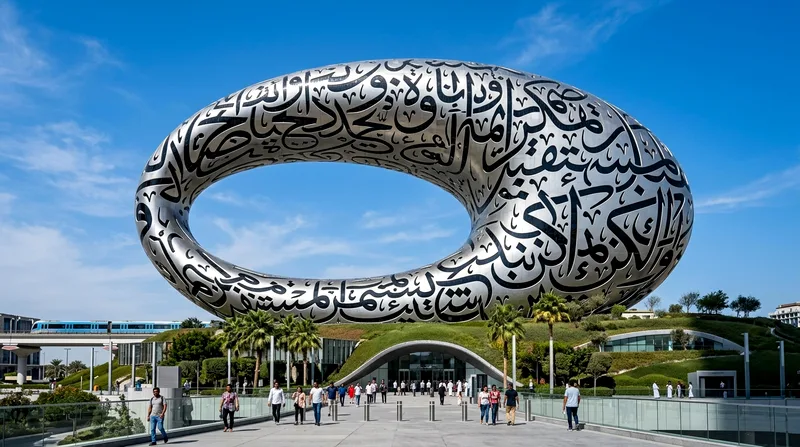
The museum is organized across several themed floors, each built around a different future scenario rather than a chronological or historical narrative. The ground and lower levels typically handle orientation and an introductory film sequence that sets the tone — visually impressive, but it's also where the biggest bottleneck forms if you arrive during a busy slot.
Moving up, floors are generally themed around space exploration (depicting an imagined future space station), a floor dedicated to the natural world and biodiversity with an emphasis on ecosystem restoration, a wellness and spirituality floor that leans more sensory and meditative, and a floor aimed specifically at children with hands-on activities built around creativity and invention. The top levels tend to focus on heritage and reflection, closing the experience on a quieter note after the higher-energy middle floors.
Compared to Expo City Dubai's pavilions or the Green Planet's biodome, Museum of the Future leans harder into narrative and atmosphere than factual density. You won't leave with a textbook understanding of climate science, but you will leave with a strong sensory impression — for some visitors that's the entire point, for others it's a letdown relative to the ticket price.
Expect queues to form at the more popular installations, particularly the space floor and the children's creativity lab. If you're visiting with kids, budget extra time there; it's usually the floor families linger on longest.
How to Book and Best Time Slots
Buying Museum of the Future tickets online is the only realistic way to go — walk-up availability is unreliable, especially during UAE school holidays or winter tourist season (November through March), when Dubai's weather pulls more visitors toward daytime indoor attractions.
Official Channels and Third-Party Platforms
The museum's own official website is the most direct and usually the most reliably priced channel, and it's where you'll find the most accurate, current information on Museum of the Price and available dates. That said, third-party platforms like Klook, Expedia, TripAdvisor, and MakeMyTrip also list tickets, sometimes bundled with transport or combined with other Dubai attractions like the Burj Khalifa or a desert safari. These can be convenient if you're already booking other activities through the same platform, but compare the total price against the official site first — bundling isn't always cheaper once you break down what's actually included. Avoid buying from unofficial resellers or social media ads promising "skip the line" access at a discount; verify any third-party seller is an authorized reseller before entering payment details.
Time-Slot Strategy and Peak Hours
Tickets are sold for specific entry time slots, and this matters more here than at most attractions because the museum controls flow tightly to manage crowd density inside. Early slots, generally right after opening, tend to be the calmest — arriving within the first hour of the museum's daily opening window gives you the clearest floors and shortest waits at the space and children's levels. Midday slots, particularly over weekends, get noticeably busier. Evening slots can work well for couples or solo travelers wanting a more atmospheric visit, since several installations rely on lighting effects that read better after dark outside. Always check Museum of the Future Dubai hours directly on the official site before planning your day, since operating hours and the museum's closure days (it typically closes for one day a week, though exact scheduling is confirmed only on their site) can change seasonally.
Is It Worth Visiting by Traveller Type
Whether this attraction earns its price tag depends heavily on who's buying the ticket. It's not a one-size-fits-all recommendation, and that's worth being honest about before you spend AED 159-169 per person.
Families with Children
For families with kids roughly aged 6 and up, this tends to land well — the children's floor is genuinely hands-on, and the sensory nature of the space and nature floors holds attention better than a standard museum would. For toddlers or very young children, it's a harder sell: a lot of the content is abstract or conceptual, and the queuing between floors can test patience fast. If you're traveling with a stroller, note that some sections involve tight walkways and dim lighting, which isn't ideal for navigating with a pram. Compare this to family-friendly alternatives like Dubai Aquarium or Kidzania — those are more purpose-built for younger children, while Museum of the Future suits the slightly older, more curious kid better.
Solo and Adult Travellers
For solo travelers, couples, and groups of adults, the museum works well as a two-hour cultural stop that photographs beautifully and gives you something different from the usual Dubai checklist of malls and desert tours. Compared to a half-day trip to Sharjah's Islamic civilization sites or a cultural walk through Al Fahidi, this is a far more modern, tech-forward alternative — less historical substance, more spectacle. Senior travelers should know there's a reasonable amount of walking and some standing-room installations without much seating, so pace yourself and ask staff about accessible routes if mobility is a concern. European travelers used to museums with deep historical context may find the lack of factual depth underwhelming; those coming from a world-traveler mindset chasing novel experiences tend to rate it more highly.
Frequently asked questions
How much does it cost to visit the Museum of the Future in Dubai?
Standard adult tickets generally run approximately AED 159-169 (roughly USD 43-46), with reduced pricing for children and possible free entry for very young kids depending on current policy. These figures shift periodically, so confirm the exact Museum of the Future Dubai price on the official website before you book.
How do I book Museum of the Future tickets online?
The official museum website is the most direct booking channel and typically shows the most accurate pricing and time-slot availability. Platforms like Klook, Expedia, TripAdvisor, and MakeMyTrip also sell tickets, sometimes bundled with other Dubai attractions — compare totals before assuming a bundle is cheaper, and avoid unofficial resellers advertising discounted "skip the line" access.
What are the operating hours and available time slots?
Hours vary seasonally and the museum typically closes one day per week, so check the official site directly rather than relying on third-party listings. Tickets are sold for specific entry time slots; early-morning slots tend to be calmer, while midday and weekend slots see the heaviest crowds.
Is the Museum of the Future worth visiting for families?
It works well for families with children roughly age 6 and older, especially on the hands-on creativity floor, but toddlers may struggle with the abstract content and queue waits. If your kids are very young, an attraction like Dubai Aquarium or Kidzania will likely hold their attention better for a similar or lower price.
What is the refund policy for tickets?
Refund and cancellation terms depend on where you purchased the ticket — the official site, Klook, Expedia, or another platform each have their own policies, and most non-refundable or time-slot-specific tickets have limited flexibility once booked. Always read the cancellation terms at checkout before paying, since last-minute date changes aren't guaranteed to be free.