Compare Dubai kayak tours by location, difficulty and traveler type. Find mangrove, creek and marina options for families, seniors and eco-tourists.
Who Each Kayak Tour Type Suits
A Dubai kayak tour isn't a one-size-fits-all booking. The city's paddling options split roughly into three environments — mangrove reserves, Dubai Creek, and the Marina/coastal zone — and each rewards a different kind of traveler. Before you look at prices or operators, it helps to know which category actually matches your fitness, patience for heat, and interest in wildlife versus skyline views.
Families traveling with kids, seniors who want gentle exercise, and photographers chasing golden-hour shots all have different ideal picks. Someone who wants a workout and open water will be bored on a slow mangrove loop; someone prone to seasickness or joint pain will struggle on a choppier Marina route. Matching tour type to traveler type matters more here than it does for, say, a desert safari, because the physical demands vary so much between a flat, sheltered creek and open coastal water near Palm Jumeirah.
Families with children
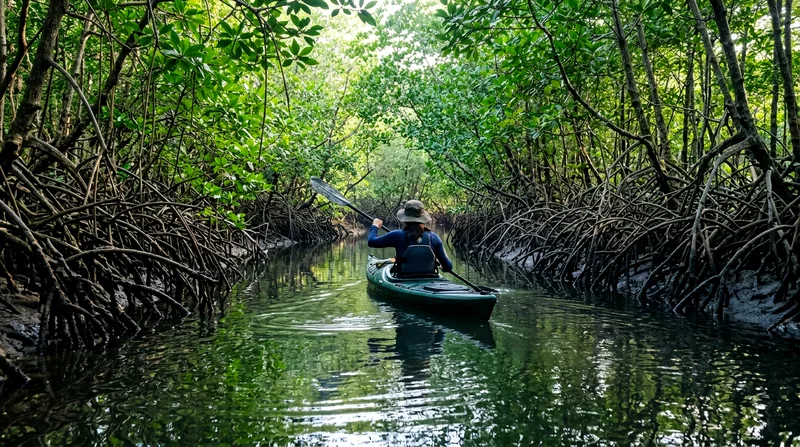
Mangrove kayak tours near Al Zorah Nature Reserve or sheltered sections of Dubai Creek work best for families, mainly because the water is shallow and calm, with minimal current. Double kayaks let a parent paddle with a child seated in front, which most operators allow from around age 6–8 depending on the company's policy — always confirm minimum age before booking, since some Marina tours set the bar higher due to boat traffic. Avoid longer Creek routes timed for sunset if you have kids under 10; a 90-minute paddle sounds fine until a tired child is stuck in the middle of the water. Shorter, 45–60 minute mangrove loops are the safer family bet.
Seniors and low-fitness travelers
Tandem kayaks in mangrove shallows are the most realistic option for seniors or anyone with reduced stamina. Guides typically paddle stern or alongside, so you're not required to do the full workout yourself. The water at Al Zorah and similar reserves rarely exceeds waist depth in the channels, and tours move at a slow pace built around spotting herons and crabs rather than covering distance. Marina tours, by contrast, can involve more open water and occasional wake from passing boats — fine for a fit senior, less comfortable for someone unsteady. If mobility is a real concern, ask specifically about transfer assistance getting in and out of the kayak, since this varies a lot between providers.
Eco-conscious and wildlife enthusiasts
Mangrove tours are the clear winner if wildlife is the point of the trip. Al Zorah and the mangrove channels near Ras Al Khaimah and Abu Dhabi's eastern mangroves host herons, crabs, and sometimes flamingos in season, and guides generally explain the ecological role of the mangroves rather than just pointing and paddling on. Dubai Creek offers some birdlife near the Ras Al Khor Wildlife Sanctuary end, but it's mixed with dhow traffic and urban noise. Marina kayaking has essentially no wildlife angle — it's a skyline experience, not a nature one, so skip it if that's your priority.
Main Kayak Tour Categories in Dubai
Once you know your traveler profile, the next decision is category. Dubai's kayak scene breaks into four practical groupings, and conflating them is the most common booking mistake I see travelers make when scrolling listings on Viator or TripAdvisor without reading the route description closely.
Mangrove kayaking experiences
These run mainly around Al Zorah Nature Reserve (technically in Ajman, a short drive from Dubai) and similar reserves near Ras Al Khaimah and Umm Al Quwain, which many Dubai-based operators include as day-trip add-ons. Expect 1–2 hour guided paddles through narrow channels, flat water, and minimal current. Equipment is usually basic sit-on-top kayaks, singles or doubles, with a guide leading in their own boat. This is the most beginner-friendly category by a wide margin and the best for anyone who wants nature without exertion.
Dubai Creek guided tours
Creek tours typically launch from a point near the historic Deira or Bur Dubai banks and run past abras, dhows, and the souk skyline. Sunset departures are popular and genuinely worth the booking if you don't mind sharing water space with commercial boat traffic — this is a working waterway, not a quiet lagoon. Sessions run 1–1.5 hours on average. The appeal here is atmosphere and photography, not wildlife or exercise; it's a cultural paddle more than a nature one.
Marina and coastal options
Tours around Dubai Marina, Palm Jumeirah, and occasionally toward Nakheel Harbour cover open, built-up waterways with skyscraper views on both sides. These suit travelers who want an active paddle and don't mind some chop from yacht and jet-ski traffic. Routes often run 1–2 hours and can be self-guided in calmer sections if the operator permits it, though most still send a guide for safety given the boat traffic. This is the least sheltered category and generally not the first choice for small children or nervous paddlers.
Group vs private tours
Group tours — often 6 to 12 kayaks moving together — are cheaper and more common, especially for mangrove and Creek routes. Private tours cost more but let you set the pace, which matters if you're traveling with a senior who needs rest stops or a toddler who gets fussy. For photographers, a private or small-group booking (2–4 kayaks) is worth the premium since large groups create wake and noise that scares off birds and ruins long-exposure shots at sunset.
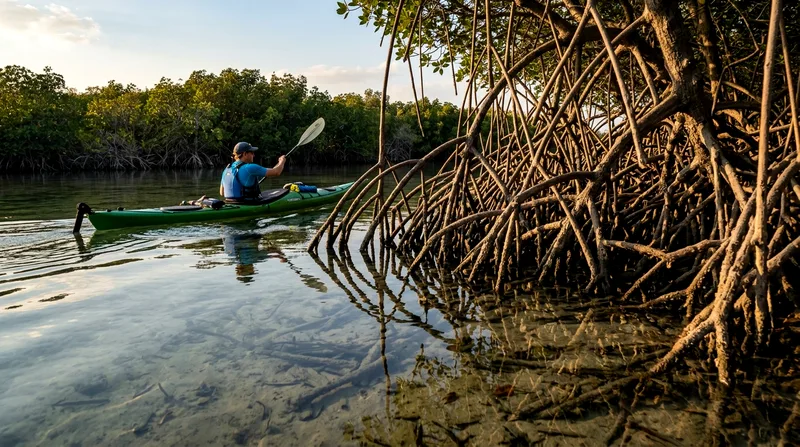
Comparison: Mangrove vs Creek vs Marina Tours
Laid side by side, the three categories differ less in price than in effort and payoff. Mangrove tours ask little of you physically and deliver the most consistent wildlife sightings. Creek tours trade wildlife for atmosphere — dhows, call to prayer echoing off old buildings, amber light on the water at sunset. Marina tours trade both of those for scale: towers, bridges, and open water that can feel more like sport than sightseeing.
Mangrove tours are the easiest and best for wildlife, Creek tours win on atmosphere, and Marina tours suit active paddlers chasing skyline views.
Dubai kayak tour types compared: mangrove, Creek and Marina routes
| Tour Type | Typical Duration | Difficulty | Wildlife Viewing | Best For |
|---|---|---|---|---|
| Mangrove (Al Zorah) | 1–2 hours | Easy | High | Families, seniors, eco-tourists |
| Dubai Creek | 1–1.5 hours | Moderate | Low–Moderate | Couples, photographers, culture seekers |
| Marina/Coastal | 1–2 hours | Moderate–Active | Low | Fit adults, active couples, solo travelers |
| Private/Small-group add-on | Varies by base route | Same as base route | Same as base route | Photographers, families needing flexibility |
Figures as of 2025; durations and difficulty vary by operator and tide conditions.
Scenery and wildlife differences
If you've already done a desert safari or an Abu Dhabi mangrove kayak trip near Eastern Mangroves National Park, Dubai's own mangrove routes will feel familiar but slightly smaller in scale. Creek scenery is unmatched for cultural texture — nothing in Marina or Al Zorah replicates the dhow-and-souk backdrop. Marina scenery is the most "Dubai postcard" of the three, useful if skyline photos matter more to you than nature photos.
Difficulty and duration comparison
Mangrove tours are the easiest, typically 1–2 hours at a slow pace with frequent pauses. Creek tours sit in the middle, similar duration but with more boat traffic to navigate, requiring a bit more attention. Marina tours are the most physically demanding of the three because of open water and occasional wind, and sessions can run up to 2 hours with less opportunity to rest mid-paddle.
What to Look for When Booking
Scrolling through listings on Viator, TripAdvisor, or local aggregators like The Best in Dubai, you'll notice wildly inconsistent descriptions. Some call a 45-minute paddle a "full tour," others bundle kayaking with a resort stay such as Centara Mirage Beach Resort or an Al Marjan Island package. Read past the headline.
Tour inclusions and equipment
Check whether the listed price includes a life jacket, dry bag, and water — not all do. Sit-on-top kayaks are standard for mangrove and Creek routes because they're easier to re-board if you tip; sit-in kayaks occasionally appear on Marina tours. If you wear glasses or bring a phone for photos, confirm a dry bag is provided rather than assuming it's optional extra gear you need to source yourself.
Group size and experience requirements
Most Dubai kayak tours require no prior experience and include a 5–10 minute briefing on paddling technique before launch. Group sizes range from small private bookings of 2 people up to 15–20 on popular Creek sunset departures. Larger groups mean more waiting at the launch point and less individual guide attention — worth avoiding if you're nervous on the water or traveling with a child who needs close supervision.
Cancellation and safety policies
Wind and tide conditions can cancel Marina and coastal tours with short notice; mangrove tours in sheltered channels are cancelled far less often. Look for a stated free-cancellation window — 24 hours before departure is common on major booking platforms — and confirm whether life jackets are mandatory for all ages (they should be). Avoid any listing that's vague about what happens if weather cancels the trip; that's a sign of a less organized operator.
Best Time to Book Your Tour
Timing affects comfort more than almost anything else in this decision. Dubai kayaking is a year-round activity on paper, but the experience in July is nothing like the experience in January.
Seasonal considerations and weather
November through March brings air temperatures in the low-to-mid 20s°C (Celsius) and manageable humidity — the best window for a mangrove paddle that might run close to midday. From June to September, daytime heat regularly exceeds 40°C, which pushes most operators to early morning (around 6–7am) or sunset departures only; some simply pause midday Creek tours altogether during peak summer. If you're booking in summer, prioritize a sunrise or sunset slot and bring reef-safe sunscreen, since shade is minimal on open water around Marina or Nakheel Harbour. Compare current boat tours and prices before you book, since seasonal demand shifts availability for sunset slots especially.
Frequently asked questions
What is the difference between mangrove and creek kayaking in Dubai?
Mangrove kayaking happens in sheltered, shallow channels — mainly around Al Zorah Nature Reserve — with calm water and frequent wildlife sightings like herons and crabs. Dubai Creek kayaking runs through the working waterway between Deira and Bur Dubai, past dhows and the historic souks, with more boat traffic and less wildlife but stronger cultural atmosphere, especially at sunset.
Do you need experience to kayak in Dubai?
No. Most mangrove and Creek tours are beginner-friendly and include a short paddling briefing before launch. Marina and coastal routes require a bit more confidence because of open water and boat wake, but guides still accompany first-timers. If you've never kayaked, start with a mangrove tour rather than Marina.
Can families with young children go on kayak tours?
Yes, generally from age 6–8 in a tandem kayak with a parent, though minimum ages vary by operator — confirm before booking. Mangrove tours near Al Zorah and shorter Creek loops are the most suitable for kids; longer Marina routes with open water and boat traffic are better suited to older children or teens.
What wildlife can you see on a Dubai kayak tour?
Mangrove channels around Al Zorah commonly show herons, crabs, and small fish, with occasional flamingo sightings in cooler months. Dubai Creek has limited wildlife beyond some birdlife near the Ras Al Khor end. Marina and coastal tours offer essentially no wildlife viewing — the draw there is skyline scenery, not nature.
What should you bring on a kayak tour in Dubai?
Reef-safe sunscreen, a hat, sunglasses with a strap, and water shoes or sandals that can get wet. Bring a dry bag or confirm one is provided if you're carrying a phone or camera. In summer, book early morning or sunset slots and bring extra water, since heat is the main risk factor, not the paddling itself.