Driving in Dubai explained: Salik tolls, speed cameras, parking zones, fuel costs and road rules. A practical guide for visitors renting a car.
Driving in Dubai: What to Expect Before You Rent
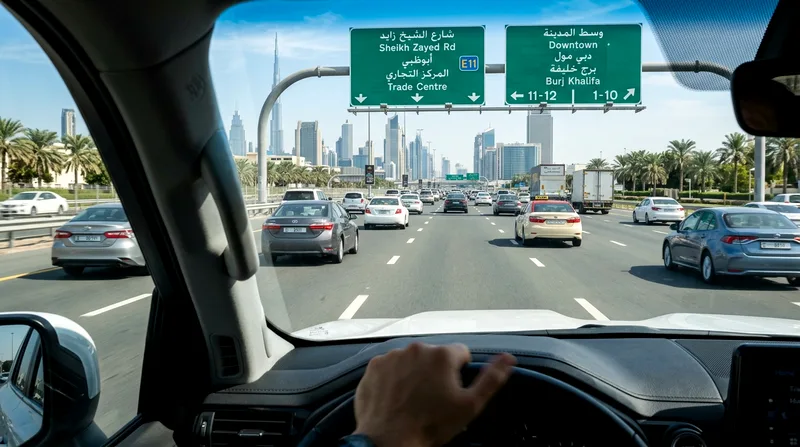
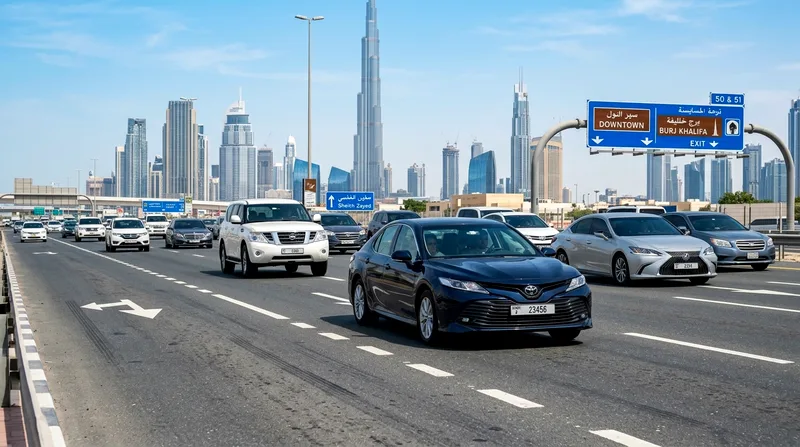
Dubai's roads are wide, well-lit and better maintained than almost anywhere in Europe — Sheikh Zayed Road alone has up to twelve lanes in places. Driving in Dubai is generally easy for visitors from the UK, Ireland or mainland Europe, because the signage is bilingual (Arabic and English), the lane markings are clear, and traffic moves on the right, just like in France, Germany or Spain. That last point matters if you're coming from a left-hand-drive country like the UK: you'll adapt within an hour.
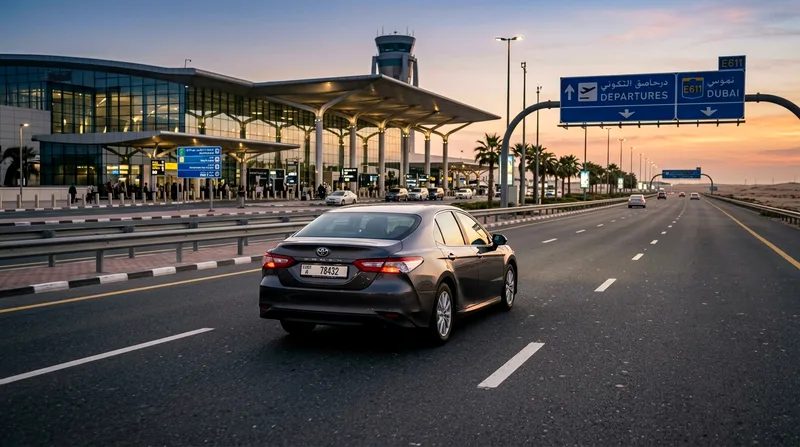
What trips people up isn't navigation — it's the system around driving. Dubai uses an automatic toll system called Salik with no barriers or toll booths, a parking regime run through an app rather than meters you feed with coins, and a sprawl of speed cameras that issue fines by post or app notification, sometimes weeks later. None of this is complicated once you know it exists. The problem is tourists who rent a car at Dubai International Airport (DXB), drive around for a week, return the car, and then get hit with toll and fine deductions from their deposit months after they've gone home.
This guide covers the rules, the costs, and the practical habits that make driving in Dubai painless rather than an expensive surprise.
Dubai Road Rules and Licence Requirements for Tourists
Most visitors can drive in Dubai on their home driving licence for a short stay, but this depends heavily on your nationality and which country issued your licence — the UAE has agreements with many countries (including the UK, most EU states, the US, Canada and Australia) that let their licence holders drive or rent a car without extra paperwork. If your country isn't on that list, you'll need an International Driving Permit (IDP) alongside your original licence. Rather than guessing, check the current rules with your rental company or the UAE's Roads and Transport Authority (RTA) before you fly — this changes periodically and rental desks at DXB will not budge if your documents don't match requirements.
Dubai drives on the right, uses metric speed limits (km/h), and follows mostly familiar European-style road rules: seatbelts mandatory for all occupants, mobile phone use while driving is banned and fined, and drink-driving carries a zero-tolerance policy with serious legal consequences — don't assume "one beer" is fine, because it isn't treated casually here.
Child Seat Laws for Families
Children under 4 years old must be in an appropriate child car seat, and kids under 10 who are shorter than 145cm generally need to use a booster or child restraint and aren't permitted to sit in the front seat. Rental companies at Dubai Airport and across the city offer child seats, but availability isn't unlimited — reserve one when you book the car rather than assuming you'll get one at the counter, especially during school holiday periods when demand spikes.
Salik Tolls: How They Work and What They Cost
Salik is Dubai's electronic toll system, and there are no barriers, no ticket machines, and no way to pay cash at the gate. A tag or plate-recognition system simply charges your account (or your rental car's linked account) as you drive through one of the toll gates positioned at key points across the city, including on Sheikh Zayed Road and Al Maktoum Bridge. Each pass through a gate costs AED 4, and there are around eight gates scattered across Dubai's main arteries — drive through two or three in a single cross-town trip and the charges add up faster than you'd expect.
The critical thing for visitors: almost every rental car in Dubai already has Salik enabled, and the rental company will bill the toll charges to your card after the trip, usually with a small administration fee added. Ask explicitly, at pickup, whether Salik is pre-registered on the vehicle and what the admin fee structure looks like — this varies between rental companies and isn't always volunteered. If you're planning a day trip toward Abu Dhabi or Sharjah, you'll likely pass through at least one or two gates each way, so budget a few extra dirhams into your fuel estimate.
Unlike London's congestion charge or Milan's ZTL zones, Salik has no restricted hours or zones to avoid — it charges on passage, at any time of day, seven days a week. There's no way to dodge it by timing your trip.
The core costs and rules of driving in Dubai are modest compared to European cities, but enforcement is stricter and less forgiving.
Driving in Dubai: tolls, parking and speed limits at a glance
| Item | Typical Cost/Limit | Where It Applies | Watch Out For |
|---|---|---|---|
| Salik toll | AED 4 per gate | ~8 gates on main roads (e.g. Sheikh Zayed Road) | No barriers; charged automatically, billed via rental company |
| Urban speed limit | 60-80 km/h | City streets, residential areas | Cameras allow very little buffer over limit |
| Highway speed limit | 100-120 km/h | Sheikh Zayed Road, Emirates Road | Left lane for overtaking only; fast lane changes |
| Paid parking | A few AED per hour | Color-coded RTA zones citywide | Pay via RTA app; free on Sundays, not Fridays |
| Mall/hotel parking | Usually free | Covered structures at malls, hotels | Can be crowded on weekends and holidays |
| Valet parking | Approx. AED 10-20 | Restaurants, malls, hotels | Convenient but tip culture varies |
Figures reflect generally published 2024-2025 rates; always confirm current Salik, parking and fine amounts with RTA or your rental company before driving.
Parking in Dubai: Zones, RTA Meters and Free Areas
Parking in Dubai is organized by colored zones — green, red, and a few other designations — each with different hourly rates and permitted durations, typically paid via the RTA Dubai parking app or at roadside pay-and-display machines. Rates are modest by European standards, usually a few dirhams per hour, but enforcement is consistent: parking wardens check plates digitally, and an overstayed or unpaid session turns into a fine rather than a warning.
Download the RTA app before you need it, not after you're circling a mall looking for a space. It lets you pay by zone number, extend sessions remotely, and check which areas are free. One quirk worth knowing: public parking across most of Dubai is free on Sundays — this was changed from the old Friday free-day as the UAE's weekend shifted to Saturday-Sunday a few years back. Many tourists still expect Friday to be the free day and get caught out.
Malls, hotels and most attractions offer free parking in their own structures, which is one reason self-driving in Dubai works well for families — you're rarely paying to park once you've arrived somewhere. Street parking in older districts like Deira or Al Fahidi can be tighter and more chaotic than the wide bays near Downtown or Dubai Marina, so if you're nervous about parking, stick to newer districts or use valet, which is common and cheap at malls and restaurants — often AED 10-20.
Speed Limits, Cameras and Fines You Should Know About
Speed limits in Dubai generally run from 60 to 80 km/h on urban roads and 100 to 120 km/h on highways like Sheikh Zayed Road and Emirates Road, with limits clearly signposted and enforced predominantly by fixed and mobile radar cameras rather than police pulling you over. Dubai's camera network is dense — one of the most extensive in the region — and it's genuinely unforgiving: many cameras allow a buffer of only a few km/h over the posted limit before triggering a fine.
Fines are issued electronically and, for rental cars, typically get forwarded to the rental company, who then charges your card — sometimes weeks after you've returned home. Check your rental agreement for how fines are handled and whether there's a processing fee on top. This is the UAE equivalent of getting a speeding ticket from a French autoroute camera months after your road trip, except Dubai's camera density is considerably higher.
There's no low-emission or restricted traffic zone system like you'd find in Milan or parts of Germany, so you won't face a surprise access fine just for entering a district. The risk here is purely speed and lane discipline, not zone restrictions.
Lane Discipline and Driving Culture
Dubai drivers use the left lane for overtaking, much like German autobahn etiquette, but compliance is inconsistent — expect sudden lane changes, tailgating, and drivers flashing headlights to signal you should move over. It's faster-paced than driving in Muscat or Ras Al Khaimah, where traffic is noticeably lighter, and more aggressive than you'll find in Al Ain's quieter streets. If you're a nervous or senior driver, stick to the right-hand lanes on highways, keep a longer following distance than feels natural, and don't take tailgating personally — it's near-universal local habit rather than targeted aggression.
Practical Tips by Traveller Type: Families, Seniors and Solo Drivers
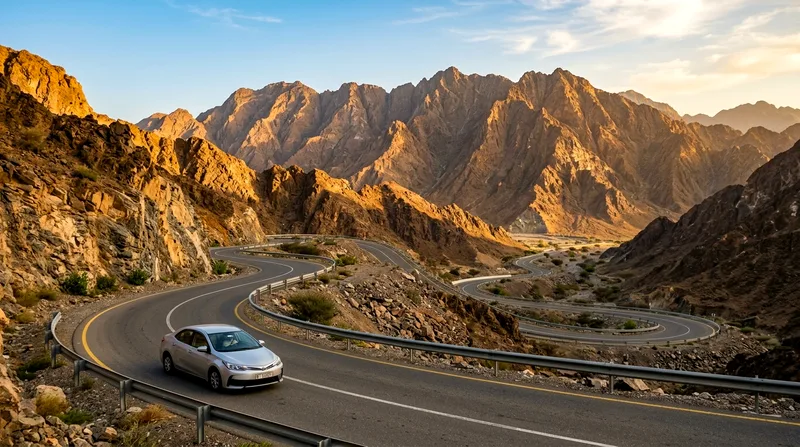
Who actually needs a rental car in Dubai depends heavily on your travel style. If you're staying centrally — Downtown, Marina, or near the Metro red line — you likely don't need to drive at all; the Metro, taxis and ride-hailing apps cover the tourist core efficiently and skip the parking and toll hassle entirely. A car earns its cost when you want day trips to Abu Dhabi (about 1 hour 20 minutes via Sheikh Zayed Road), Hatta's mountains, or the deeper desert, where public transport options thin out fast.
Families with Children
A rental car gives families flexibility that taxis don't — switching between the beach, a mall, and a desert safari pickup point in one day is far easier with your own vehicle and car seats already installed. Book child seats in advance, factor in that most malls and attractions have free covered parking (useful in summer heat), and budget Salik charges if you're crossing the city between Jumeirah beaches and Downtown attractions multiple times a day.
Seniors and First-Time Visitors
The roads themselves are wide, smooth and well-signposted — easier physically to drive than many older European city centers with narrow lanes and cobbled streets. The challenge is pace: highway traffic moves fast and lane changes happen abruptly. If that sounds stressful, consider renting for out-of-town day trips only (to Al Ain or Fujairah's coast, for example) and using taxis within the city itself, which avoids rush-hour density on Sheikh Zayed Road around 7-9am and 5-7pm.
Solo Travelers and European Drivers
If you're used to driving in Spain, France or Germany, Dubai will feel familiar within the first ten minutes — right-hand traffic, metric speeds, clear signage. Solo travelers renting for a few days should prioritize GPS reliability and a car with Salik pre-enabled, and should know that fuel is cheap by European standards, making a one-way trip toward Sharjah or Ras Al Khaimah markedly less costly than the equivalent drive back home.
Frequently asked questions
Do I need an international driving permit to drive in Dubai?
It depends on your nationality and licence country. Visitors from the UK, most EU countries, the US, Canada and Australia can usually drive or rent a car on their home licence alone for a short visit. If your country isn't covered by a UAE recognition agreement, you'll need an International Driving Permit (IDP) alongside your original licence. Confirm with your rental company before arrival, since requirements are checked strictly at pickup counters at Dubai Airport.
How much does a Salik toll cost per gate in Dubai?
Each Salik gate charges AED 4 per pass, with no variation by time of day or vehicle type for standard cars. There are around eight gates across Dubai's main roads, so a cross-town trip can easily rack up AED 8-16 in tolls. Rental cars usually have Salik pre-enabled, and charges are billed to your card afterward, often with a small admin fee.
Is parking free anywhere in Dubai?
Yes — public paid parking across most of Dubai is free on Sundays, since the UAE weekend shifted to Saturday-Sunday. Many malls, hotels and attractions also offer free parking in their own structures year-round. Street parking elsewhere is metered through the RTA app and enforced consistently, so don't assume any other day is free.
What is the speed limit on Sheikh Zayed Road?
Sheikh Zayed Road's speed limit varies by stretch, generally between 100 and 120 km/h, clearly signposted and monitored by frequent radar cameras. The permitted buffer over the limit before triggering a fine is small, so cruise control set a few km/h under the posted limit is the safer habit on this road.
Can I use Google Maps for navigation in Dubai?
Yes, Google Maps works reliably in Dubai and is widely used by residents and rental companies alike, with accurate road data and live traffic updates. It's a safer bet than relying solely on a rental GPS unit, which can be outdated. Just note that newer developments and some desert routes may have patchier coverage, so download offline maps before heading toward Hatta or deeper desert areas.