Top road trips from Dubai by hire car: Abu Dhabi, Fujairah, Hatta, Ras Al Khaimah and Oman. Routes, drive times, border tips and what car type you need.
Road Trips From Dubai: Why Rent a Car Here
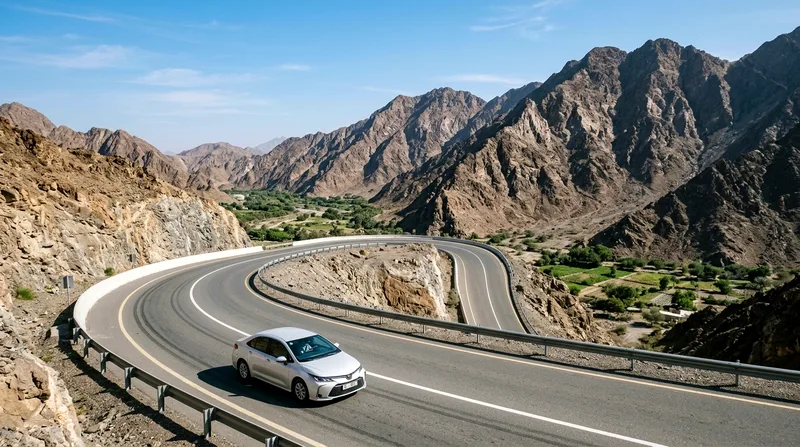
Dubai sits at the center of a road network that reaches Abu Dhabi, the Hajar Mountains, two coastlines and the Omani border within two hours or less. The E11, E88 and E311 highways are wide, well-signed and mostly toll-free outside Dubai's own Salik gates, and fuel costs a fraction of what drivers pay in Germany or the UK. That combination — short distances, good roads, cheap petrol — is why road trips from Dubai work better as self-drive outings than as organized coach tours for most of these routes.
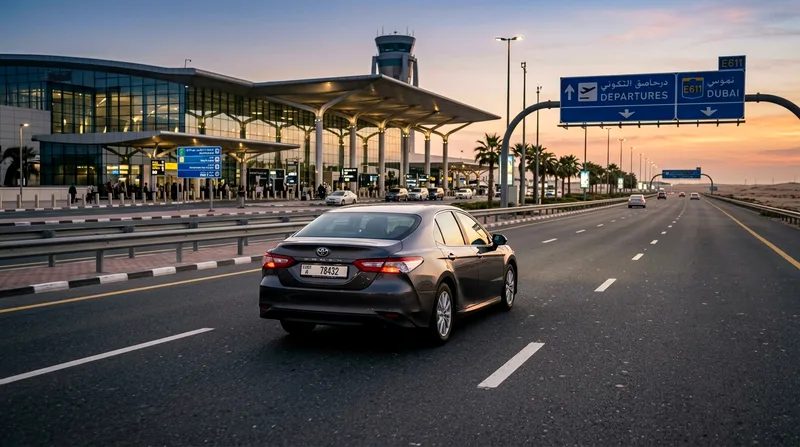
Pick up a car at Dubai International Airport (DXB) or at a city branch, and you can be swimming in Fujairah or walking through the Louvre Abu Dhabi before lunch. The honest caveat: not every route suits every car. A city-spec sedan is fine for Abu Dhabi or the coast roads, but Hatta's dirt trails and Jebel Jais's switchbacks reward a higher-clearance vehicle, and Oman trips come with paperwork most renters don't expect. Below is a route-by-route breakdown, what to drive, and what tends to catch first-timers off guard.
Dubai to Abu Dhabi: Louvre, Grand Mosque and Yas Island
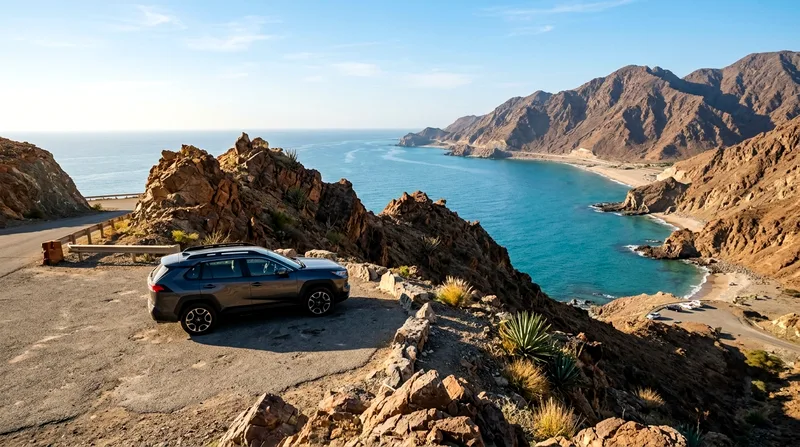
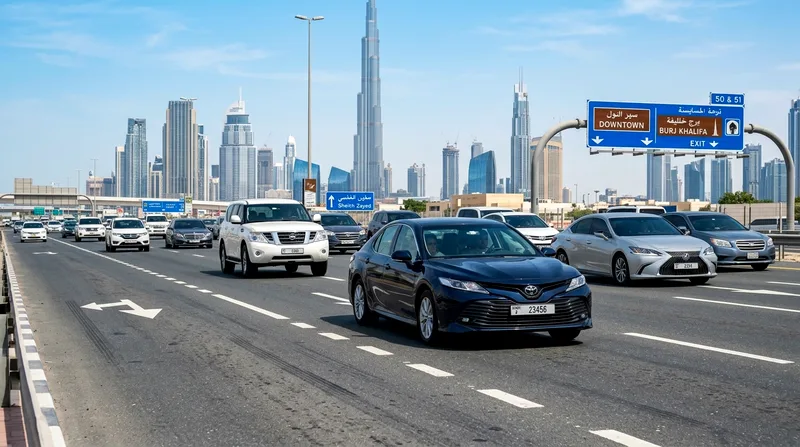
The Dubai to Abu Dhabi drive is the easiest and most rewarding day trip on this list — about 1 hour 20 minutes via the E11, covering roughly 140 km of flat, well-lit highway. There's no toll on the Abu Dhabi side, though you'll likely pass through a Salik gate leaving Dubai (currently around AED 4, charged automatically to the rental company's account and billed to you later). Speed limits sit at 120 km/h for most of the route, enforced by radar cameras that don't forgive 20 km/h over — rental companies pass fines straight to your card, usually with an admin fee on top.
Families gravitate toward Yas Island, home to Ferrari World, Warner Bros. World and Yas Waterworld — plan a full day if you're doing more than one park, since they're spread across the island and parking alone takes time to navigate. Couples and culture-focused travelers should prioritize the Sheikh Zayed Grand Mosque (free entry, modest dress required, closes to visitors on Friday mornings) and the Louvre Abu Dhabi, which charges a standard adult admission and is far less crowded on weekday mornings than weekends.
Is Abu Dhabi Worth a Day Trip From Dubai?
Yes, and it's arguably the single best-value road trip from Dubai precisely because the drive is so painless. Compare that to a Doha trip, which isn't driveable at all from Dubai — you'd fly — or Muscat, which takes most of a day just to reach. Abu Dhabi delivers a genuinely different city (lower-rise, more formal, heavier on museums and mosques) without the drive eating into your day. The one thing I'd skip: trying to combine Yas Island and the cultural sites in a single visit. Split them across two trips if you can, because rushing the Grand Mosque to make a theme park slot defeats the point of either.
Dubai to Fujairah and the East Coast Beaches
The Dubai to Fujairah road trip runs about 1 hour 30 minutes via the E88, climbing through the Hajar Mountains before dropping to the Gulf of Oman coast. This is the UAE's "other" coastline — calmer water, fewer beach clubs, more fishing villages — and it's the route couples and senior travelers tend to enjoy most because the pace slows down noticeably once you're past the mountains.
Fujairah City itself is modest; the real draw is the coast north and south of it, including Al Aqah beach, where several resorts offer day-pass access to loungers and water, and decent snorkeling around Snoopy Island just offshore. The drive back can be done via a slightly longer coastal road if you want sea views rather than repeating the mountain pass — it adds maybe 20–30 minutes but it's worth it once.
Watch out for the mountain stretch: it's a proper two-lane road with trucks, blind curves and occasional loose gravel after rain. Not dangerous if you're paying attention, but it's not a road for distracted driving, and overtaking trucks on the climb takes patience. A standard sedan handles it fine — this isn't 4WD territory, despite what some rental staff will tell you to upsell a bigger car.
Dubai to Hatta: Mountains, Dam and Heritage Village
Hatta sits about 1 hour 15 minutes from Dubai via the E44 and E102, and it's the most popular half-day road trip for a reason — mountain scenery, a turquoise-less but genuinely scenic reservoir at Hatta Dam, and the restored Hatta Heritage Village with its old fort and watchtowers. The tarmac road all the way to Hatta is excellent; a 2WD rental, including the cheapest economy hire, gets you there without issue.
Where the 4WD question actually matters is beyond the paved road. Hatta's off-road trails — through Hatta Pools, the wadi routes, and the mountain biking/4x4 tracks near the dam — need genuine ground clearance and, ideally, low-range gearing. Attempting these trails in a city sedan is the single most common rental mistake I'd flag for this route: people get stuck in soft gravel or scrape the underside on rocky sections, and rental insurance typically excludes off-road damage entirely unless you've bought a specific off-road waiver, which not every company offers.
Hatta: Day Trip or Overnight?
Most visitors do Hatta as a day trip, and that's genuinely enough — a few hours covers the dam viewpoint, the heritage village and lunch. If you want kayaking on the reservoir or a longer mountain bike session, there are basic eco-tourism cabins near the dam worth considering for one night. Compare this to Al Ain, which offers a similar "escape the city" mountain-and-heritage combination but sits further south near the Omani border and leans more toward oasis gardens and the national museum than water activities.
Dubai to Ras Al Khaimah and Jebel Jais
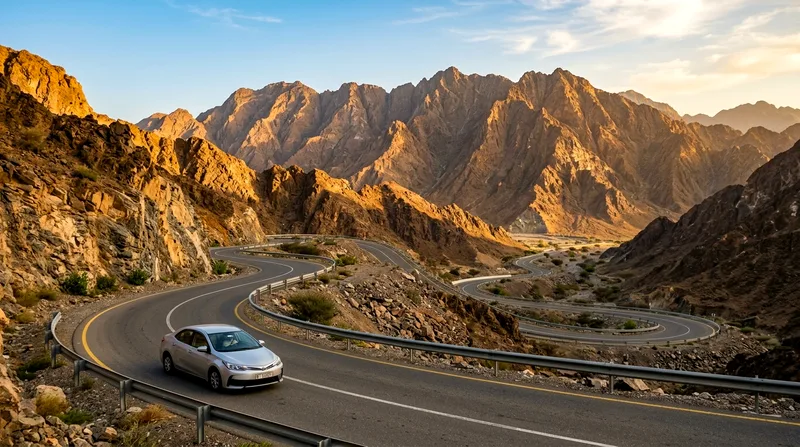
Ras Al Khaimah is roughly 1 hour from Dubai via the E11, making it one of the shorter drives on this list, yet it feels like a different emirate entirely — less built-up, more coastline and mountain in close proximity. The main draw for driving enthusiasts and thrill-seekers is Jebel Jais, the UAE's highest peak, reached via a paved mountain road with hairpin bends that's become genuinely popular with drivers who enjoy a proper mountain route. It's also home to the world's longest zipline, if that's your reason for the trip.
The Jebel Jais road itself is sealed and doesn't require 4WD, but it's steep, narrow in sections and cold enough at the top in winter that you'll want a jacket — unusual advice for the UAE, but accurate. Compare RAK to Sharjah, which is closer to Dubai (some areas are essentially contiguous) but offers none of the mountain or coastal scenery; RAK is worth the extra drive time if landscape is the point of your trip rather than just ticking off another emirate.
Boat tour lovers should note RAK is also the jumping-off point for day trips toward the Musandam Peninsula — more on that below — and RAK's own coastline has calmer dhow cruise options around Al Marjan Island if you don't want to cross into Oman at all.
Crossing Into Oman: Musandam and Muscat by Car
A Dubai to Oman drive is absolutely possible, and the Musandam Peninsula — reached via Ras Al Khaimah and the Tibat border crossing — is a popular target for its dhow cruises through the fjord-like inlets locals call "Norway of Arabia." The drive from Dubai to the border is around 2 hours; add border processing time, which varies but can easily take 30–60 minutes each way.
Here's the catch that trips up a lot of renters: not every UAE rental car is permitted to cross into Oman. Many companies restrict their vehicles to UAE borders entirely, and the ones that do allow it require advance written permission, a cross-border insurance certificate (often an extra daily fee), and sometimes a different vehicle class altogether. Don't assume — confirm this with the rental company before you book if Oman is part of your plan, because turning up at Tibat without the paperwork means turning around.
Driving all the way to Muscat is a longer undertaking — figure at least 5 to 6 hours from Dubai once you're through Musandam or via the inland route — and most travelers either fly between Dubai and Muscat or treat Musandam as the self-drive Oman experience and leave Muscat for a separate trip. If dhow cruises are the goal rather than the capital itself, Musandam via RAK is the more efficient drive by far.
Which Car Type Do You Need for Each Road Trip?
For Abu Dhabi, Fujairah and Ras Al Khaimah's paved roads including Jebel Jais, a standard 2WD sedan or compact SUV is genuinely sufficient — the roads are sealed, well-maintained and don't demand extra clearance. Paying extra for a 4WD on these routes is a waste of budget unless you specifically want the higher driving position or plan to detour onto unpaved tracks.
Hatta is the split case: tarmac to the dam and heritage village needs nothing special, but the off-road wadi and pool trails need a proper 4WD with low-range capability, and you should confirm your rental insurance actually covers off-road use before attempting them. For Oman border crossings, the car type matters less than the paperwork — a mid-size SUV is comfortable for the Musandam mountain roads, but it needs to be one the rental company has explicitly cleared for cross-border travel.
Fuel budgeting is simple across every route: petrol runs around AED 3 per liter, which is cheap by European standards — a full tank rarely costs more than a casual dinner out. That's one less variable to worry about when comparing these routes against, say, a flight to Doha or Muscat, where airfare and airport time erase most of the time savings over a 2–3 hour drive.
Most road trips from Dubai are comfortable in a standard 2WD car — only Hatta's off-road trails and Oman crossings need extra planning.
Road trips from Dubai compared: distance, drive time and car type needed
| Destination | Drive Time From Dubai | Distance (approx.) | Recommended Car | Best For |
|---|---|---|---|---|
| Abu Dhabi | 1 h 20 min | 140 km | 2WD sedan | Families, seniors, culture |
| Fujairah / East Coast | 1 h 30 min | 120 km | 2WD sedan | Couples, beach lovers |
| Hatta (paved sites) | 1 h 15 min | 100 km | 2WD sedan | Day-trippers, families |
| Hatta (off-road trails) | 1 h 15 min + trail time | 100 km | 4WD with low range | Adventure seekers |
| Ras Al Khaimah / Jebel Jais | 1 h | 100 km | 2WD or compact SUV | Driving enthusiasts |
| Musandam, Oman (via RAK) | 2 h to border | 150 km to Tibat | Cleared SUV, cross-border insurance | Boat tour lovers |
Figures as of 2025; drive times exclude traffic and border processing, which can add 30-60 minutes for Oman crossings.
Frequently asked questions
Can I take a Dubai rental car to Oman?
Only if the rental company specifically authorizes it. Many standard UAE rental agreements prohibit crossing into Oman entirely, and those that allow it require advance permission, extra cross-border insurance (usually a daily surcharge), and sometimes a vehicle swap. Always confirm in writing before your trip — don't assume the car you've booked is cleared for the Musandam or Muscat border crossings.
Do I need a 4WD to drive to Hatta from Dubai?
No, not for the main sites. The road to Hatta Dam and Hatta Heritage Village is fully paved, and a standard 2WD rental handles it without issue. You only need a 4WD with low-range gearing if you're heading onto Hatta's off-road wadi and pool trails, and even then, check that your insurance covers off-road use first.
How long does it take to drive from Dubai to Abu Dhabi?
Around 1 hour 20 minutes under normal traffic, covering roughly 140 km on the E11 highway. It's one of the easiest drives in the region — flat, well-signed, and mostly a straight shot, though rush-hour traffic near either city can add 20–30 minutes.
Are there tolls on the Dubai to Abu Dhabi highway?
There's no toll gate on the Abu Dhabi side of the E11, but you'll likely pass through at least one Salik toll gate leaving Dubai, currently charged at a few dirhams per crossing. Rental companies bill Salik charges automatically to your card after the rental ends, so don't expect a toll booth stop — just expect a small line item later.
Is fuel expensive in the UAE for a road trip?
No — fuel in the UAE runs around AED 3 per liter, noticeably cheaper than in most of Europe. A full tank on a compact rental rarely costs more than AED 150–200, which makes fuel a minor factor compared to rental rates, insurance excess or cross-border fees when budgeting these road trips.