Explore Musandam's fjords on a dhow cruise from Dubai. Compare tour types, pricing ranges, inclusions, and booking tips for dolphins and snorkeling.
Who Should Book a Musandam Day Trip
A Dubai to Musandam day trip suits people who want scenery and wildlife without the hassle of a multi-day Oman itinerary. You leave before 7am, cross into Oman near Tibat, cruise the fjords around Khasab for roughly 3-4 hours, and you're back in your Dubai hotel by early evening. It's a long day — figure 10 to 12 hours door to door — but it's also the only realistic way to see Musandam's fjords if your Dubai trip is under a week.
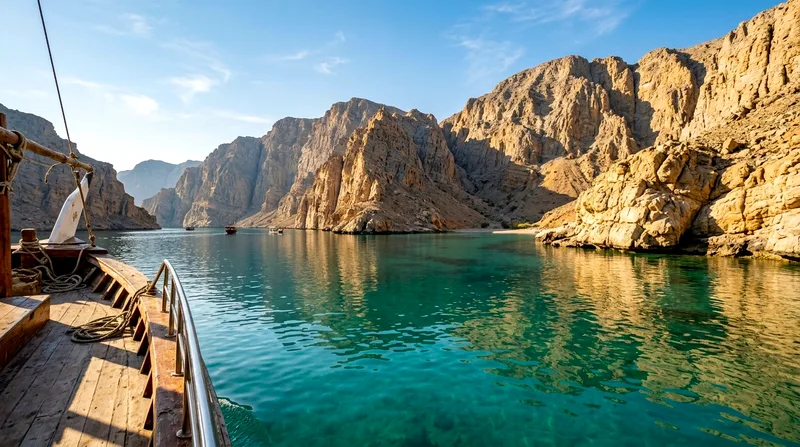
I'd steer this toward travelers who already have Dubai's city sights covered — Burj Khalifa, the souks, maybe a desert safari — and want one day that looks nothing like the rest of the trip. The fjords are genuinely dramatic: steep brown mountains dropping straight into still water, with none of the development you see along Dubai's coastline. Compare that to a day trip to Abu Dhabi or Sharjah, both of which are culture-and-architecture outings. Musandam is the only nearby option that's purely nature and water.
It doesn't suit everyone. If you get carsick, the drive each way is close to 2 to 2.5 hours on winding mountain roads near the border, and that's before you add the border crossing itself. If you've got toddlers, the combination of a long drive, a border stop, and several hours on open water is a lot to ask. For those travelers, I'd point toward a shorter Dubai boat cruise on the Marina or Dubai Creek instead, or a Desert Rangers-style desert excursion that's closer to the city.
Boat tour enthusiasts and nature lovers
If you've already done a dhow dinner cruise on Dubai Creek or a yacht trip past Palm Jumeirah, Musandam is the natural next step up. The water here is clearer, the coastline is uninhabited for long stretches, and you're far more likely to see wildlife — dolphins show up on a large share of trips, and sea turtles and reef fish are common on the snorkeling stops. Birdwatchers also rate the area; you'll see osprey and other raptors along the cliffs. This is the one Dubai-adjacent boat trip that feels like an actual nature excursion rather than a scenic ride.
Couples seeking adventure and scenic experiences
Couples tend to get the most out of this trip because the pacing works for two people rather than a family managing kids' attention spans. A traditional dhow cruise with swimming stops, a fish lunch on deck, and a few hours watching the cliffs pass by has a slower, more romantic rhythm than most Dubai excursions. If budget allows, a private charter (rather than a shared group dhow) is worth the premium for couples — you skip the crowd noise and get to choose your own pace for the snorkeling stops.
Tour Types: Dhow Cruises vs. Speed Boats
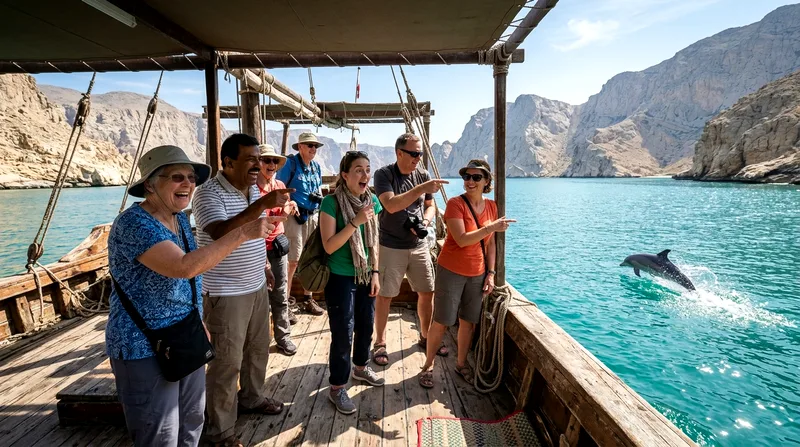
There are really two product categories sold as a "Musandam dhow cruise from Dubai," and they suit different travelers. The traditional dhow is a large, slow wooden boat — shaded, with cushioned seating, usually carrying a group of 20-40 passengers. The speedboat option is smaller, faster, more exposed to sun and spray, and typically caps at 8-12 passengers. Neither is objectively better; they just serve different priorities.
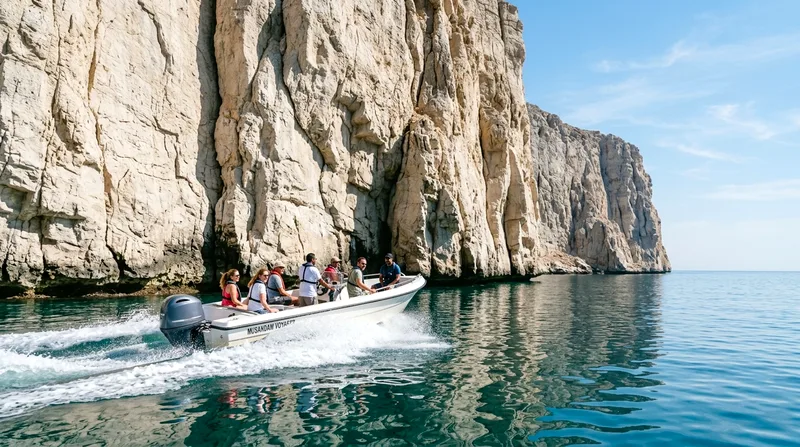
Dhow cruises are the default booking on Viator, GetYourGuide, and Headout listings for Musandam, and for good reason — they include lunch, shade, and a relaxed 3-4 hour cruise through the fjords with two or three swimming/snorkeling stops. Speedboat tours move faster between points, get you closer to dolphin pods in open water, and often include more active stops, but you'll be standing or gripping a rail rather than lounging, and there's rarely a cooked meal on board.
Traditional dhow cruises suit comfort and lunch-included value, while speedboats and private charters trade shade and meals for speed and flexibility.
Musandam dhow cruise from Dubai: tour types compared
| Tour Type | Typical Duration | Group Size | Best For | Meals Included |
|---|---|---|---|---|
| Shared dhow cruise | 3-4 hours on water | 20-40 people | First-timers, families, budget | Yes, usually buffet lunch |
| Speedboat tour | 2-3 hours on water | 8-12 people | Active travelers, dolphin-focused trips | Rarely, snacks only |
| Private dhow charter | 4-6 hours, flexible | Your group only | Couples, small groups wanting privacy | Often, negotiable |
| Private speedboat charter | 2-4 hours, flexible | Your group only | Small groups wanting speed + privacy | Rarely |
Figures as of 2025; exact durations and inclusions vary by operator — confirm before booking.
Traditional dhow cruises with swimming stops
This is the standard format and the one I'd recommend to most first-timers. The dhow anchors in two or three coves along the fjords — Telegraph Island is the classic stop, a small rock island that once held a British relay station — and you get 20 to 40 minutes in the water each time, snorkel gear usually provided. Lunch is typically a buffet of grilled fish, rice, salads, and fruit, served mid-cruise. The downside: on a busy day, you're sharing anchor points with several other dhows at once, so Telegraph Island's water can feel more crowded than the marketing photos suggest.
Group tours vs. private charter options
Shared group tours are priced per person and are the cheapest way to see Musandam — expect them to be bundled with round-trip transport from your Dubai hotel. A private charter, whether dhow or speedboat, costs a flat rate for the boat regardless of group size, which only makes financial sense if you're traveling as a family of 5+ or a group of friends splitting the cost. For two people, a private charter can run several times the per-person group rate, so weigh that against how much you actually value having the boat to yourselves.
What to Look for When Booking
The listings on Viator, GetYourGuide, and Headout for a Musandam dhow cruise from Dubai look similar at a glance, but the details that matter are buried in the fine print. Read the full itinerary, not just the headline photo of dolphins and cliffs.
Inclusions: meals, snorkeling gear, hotel pickup
Check four things specifically: hotel pickup (not all tours collect from every area of Dubai — some require you to meet at a central point), lunch (buffet vs. packed snack vs. not included), snorkeling gear (mask and fins provided vs. bring-your-own), and whether the Oman visa fee is bundled into the price or charged separately at the border. That visa fee is one of the most common surprise costs — some tour prices quote it separately, others fold it in. If it's not explicitly stated, assume it's extra and budget for it.
Group size, cancellation policy, and reviews
Group size isn't always listed upfront, so check reviews on TripAdvisor or the booking platform itself for mentions of overcrowding — a 40-person dhow with a packed schedule means less time in the water per person. Cancellation policy matters more here than on most Dubai tours because the trip depends on weather and sea conditions; a flexible free-cancellation window (typically 24 hours before departure) protects you if conditions turn rough near the Strait of Hormuz. Avoid any listing with no recent reviews at all — Musandam trips are popular enough that a reputable operator should have a steady run of recent feedback.
Best Time to Visit and Book
Timing affects both comfort and what you'll see in the water, and it's worth planning around rather than booking on a whim.
Seasonal weather and dolphin sighting patterns
October through April is the comfortable window, with air temperatures in the low-to-mid 20s°C and calmer seas. May through September gets brutally hot — well into the 40s°C by midday — and open-boat speedboat trips become genuinely uncomfortable; a shaded dhow is the better call if you're traveling in summer. Dolphin sightings happen year-round in Musandam's waters, since resident pods live in the Strait of Hormuz area rather than migrating seasonally, but mornings tend to be calmer and sightings are reported more consistently on the early departures before boat traffic picks up.
Advance booking recommendations and availability
Book at least 3-5 days ahead during UAE winter (November through March), when Dubai's tourist numbers peak and Musandam tours fill up alongside desert safaris and other day trips. In summer, a day or two's notice is usually enough. If you're traveling during Eid holidays or the Dubai Shopping Festival period, book a week or more out — both Emirati and Omani visitors treat Musandam as a local getaway during these stretches, and boats sell out. Always check current prices and availability when booking, since rates shift with season and fuel surcharges.
Visa and Border Crossing Information
This is the part of a Musandam day trip that catches people off guard, so treat it as seriously as the boat choice itself. Musandam is Omani territory, physically separated from the rest of Oman by UAE land — you cross an actual international border at Tibat to get there, even though the whole trip starts and ends in Dubai.
Most nationalities eligible for Oman's visa-on-arrival (which includes UK, EU, US, Canadian, and Australian passport holders, among others) can get a visa stamped at the Tibat border crossing. Tour operators typically handle the paperwork for you as part of the group crossing, which is one of the real advantages of booking an organized tour rather than self-driving — you hand over your passport, the guide manages the stamps, and you wait on the bus rather than navigating an unfamiliar immigration process alone. Bring a passport with at least six months' validity, and carry a physical passport, not a digital copy — officers at Tibat do not accept photos of travel documents.
One caution: if you're on a multiple-entry UAE visa restriction or a visa run from a third country, double-check your UAE re-entry conditions before crossing — leaving the UAE, even briefly for a Musandam day trip, counts as exiting the country and your return entry is subject to whatever visa rules apply to your nationality. This rarely causes problems for standard tourist visa holders, but it's worth five minutes of checking rather than finding out at the border.
Border wait times and what to bring
Border processing for a tour group typically takes 30-60 minutes each direction, longer on busy weekend mornings or around public holidays in either country. Bring small UAE dirham or Omani rial cash for any incidental visa or processing fees not already covered by your tour price, a printed or digital copy of your tour booking confirmation, and sun protection — you'll likely be waiting outside or in a non-air-conditioned area during processing.
Frequently asked questions
Do I need a visa to travel to Musandam from Dubai?
Yes. Musandam is Omani territory, so crossing from the UAE at Tibat requires an Oman visa. Most Western passport holders qualify for visa-on-arrival, and organized tours typically handle the paperwork as a group, collecting passports and processing stamps while you wait. Confirm with your specific tour operator whether the visa fee is included in the trip price or payable separately at the border.
How long is the drive from Dubai to Musandam?
The drive from Dubai to the border at Tibat, then on to Khasab, takes roughly 2 to 2.5 hours each way, depending on your pickup location and traffic through Ras Al Khaimah. Add border processing time of 30-60 minutes each direction, so total transit alone is around 5-6 hours round trip, before you factor in the cruise itself.
What is included in a Musandam day trip package?
Most shared dhow cruise packages include round-trip hotel pickup from Dubai, the border crossing and visa processing, the boat cruise with snorkeling stops, snorkel gear, and a buffet lunch. Speedboat tours and some budget packages may exclude lunch or snorkel gear. Always check the specific inclusions list before booking rather than assuming.
Can you see dolphins on a Musandam dhow cruise?
Dolphin sightings are common but never guaranteed — resident pods live in the Strait of Hormuz area year-round, and many operators report sightings on a large majority of trips, particularly on calmer morning departures. No legitimate operator can promise a sighting, so treat it as a strong likelihood rather than a certainty.
What is the best time to visit Musandam?
October through April offers the most comfortable temperatures, in the low-to-mid 20s°C, and calmer sea conditions for both dhow and speedboat trips. Summer months (May-September) push past 40°C, making shaded dhow cruises far more bearable than open speedboats. Dolphin sightings happen year-round, so temperature and comfort should drive your timing decision more than wildlife odds.