Discover the best Dubai walking tours for culture lovers and seniors. Compare guided walks through Old Town, Creek, and Downtown with booking tips.
Who Dubai Walking Tours Suit Best
A Dubai walking tour isn't for everyone, and that's worth saying upfront. If your trip is built around Atlantis, the Burj Khalifa observation deck, and a desert safari, walking tours will feel like a slow add-on rather than the main event. But for travelers who want to understand how Dubai actually grew — from a pearling and trading post on the Creek to the skyline it has now — a guided walk is the most efficient way to get that context. You cover maybe 2 to 4 kilometers in two hours and come away understanding more than a half-day bus tour gives you.
Walking tours suit people who like to stop, ask questions, and look closely at details: carved wooden doors, wind-tower cooling systems, the layout of a souk. They don't suit anyone in a rush, anyone with serious mobility limitations and no advance accessibility check, or families with toddlers who won't tolerate standing still while a guide explains Bastakiya architecture for ten minutes.
Culture-curious travelers
If you've already done Petra, wandered the old medina in Marrakech, or spent a morning in Muscat's Mutrah Souk, Dubai's Al Fahidi Historical Neighborhood will feel familiar in scale but different in content — this is Gulf trading architecture, not North African or Omani. Culture-curious travelers get the most from tours that include the Dubai Museum at Al Fahidi Fort (small, modest, but a useful primer) and a stop at a traditional majlis or textile souk. Expect guides to cover pearl diving history, the Bastakiya merchant families, and the reasoning behind wind towers — genuinely useful stuff if you plan to spend more time in the region, including Sharjah's Heritage Area, which covers similar ground with a stronger museum focus.
Solo travelers and seniors
Solo travelers often prefer joining a small group walk over hiring a private guide — not for cost alone, but because a group of six to twelve strangers is an easy way to have low-stakes conversations in a city where striking up chats with locals doesn't happen as organically as in, say, Lisbon or Istanbul. For seniors, the appeal is pace control. A good senior-friendly walking tour in Dubai moves slower, includes more seated breaks, and sticks to shaded or covered routes — Al Fahidi's narrow lanes genuinely are cooler than open plazas in Downtown. Ask before booking whether the route includes stairs (some heritage house conversions do) and whether the pace is adjustable.
Main Walking Tour Categories Compared
Dubai's walking tour market splits into a few clear categories, and picking the wrong one is the most common booking mistake. People assume "walking tour" means one standard product; it doesn't.
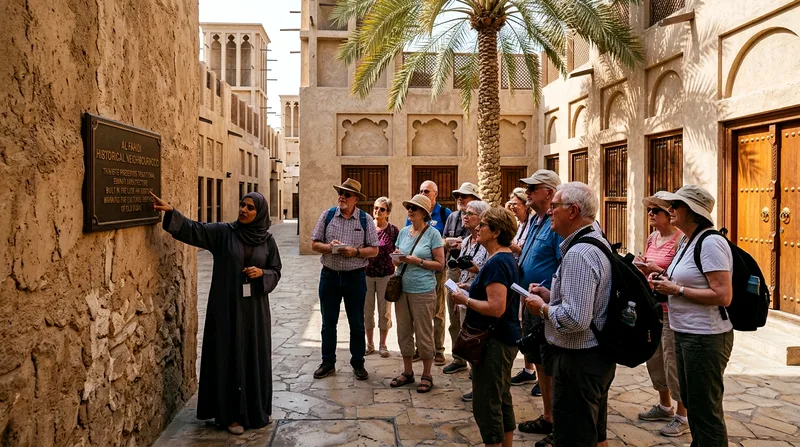
Guided group tours offer the best value for most first-time visitors, while private tours suit seniors and families needing a flexible pace.
Dubai walking tour types compared: group, private, and free options
| Tour Type | Typical Group Size | Duration | Typical Cost Range | Cancellation Flexibility | Best For |
|---|---|---|---|---|---|
| Guided group tour | 10-20 people | 1.5-2.5 hours | AED 100-250 pp | Often free up to 24h before | First-time visitors, culture-curious travelers |
| Private guided tour | 1-6 people | 2-3 hours, flexible | AED 400-900 total | Usually flexible, confirm at booking | Seniors, families, photographers |
| Free walking tour | 8-25 people | 1.5-2 hours | Tip-based (no fixed fee) | Informal, limited slots | Budget travelers, solo backpackers |
| Self-guided walk | Individual or couple | Flexible | Free (minus any entry fees) | N/A | Independent travelers comfortable navigating alone |
Price ranges are approximate and vary by operator and season; always check current prices and cancellation terms before booking.
Guided group vs. private tours
Guided group tours are the default booking on platforms like TripAdvisor and TourScanner — typically 10 to 20 people, a fixed route, fixed timing, and a guide working to a script they've delivered hundreds of times. They run about 90 minutes to 2.5 hours and usually cost less per person than private options, often in the range of AED 100–250 depending on inclusions like museum entry or an abra boat crossing. The trade-off: you can't linger, you can't skip the parts that bore you, and if someone in the group asks twenty questions about Dubai real estate prices, that's your tour now too.
Private tours cost more — often two to four times the per-person group rate once you account for a dedicated guide — but you control pace, duration, and focus. For seniors needing frequent rest stops, or photographers who want to linger in one alley for fifteen minutes, private is worth the premium. Families with children also do better private, since kids set their own rhythm regardless of what's scheduled.
Free vs. paid experiences
Free walking tours exist in Dubai, mostly run on a tips-based model similar to free tours in European cities. They're real, and they're a reasonable way to get oriented in Al Fahidi or Old Dubai on a tight budget — but availability is less consistent than in Rome or Berlin, where free tour companies run multiple daily departures year-round. In Dubai, expect fewer time slots, smaller operator pools, and more schedule gaps during the hottest months when outdoor foot traffic drops. Paid tours guarantee a confirmed slot and usually include at least one paid entry (a fort, a museum, a boat ride) that a free tour won't cover. If your schedule is tight and you can't risk a no-show guide, pay for a fixed-departure tour instead.
What to Look for When Booking
Read past the star rating. A 4.5-star average on TripAdvisor or TourScanner tells you little about whether the pace suits a 70-year-old traveler or whether the "historical neighborhood walk" actually enters any buildings versus just passing by them.
Tour inclusions and group size
Check exactly what's included before comparing prices — this is where listings get misleading. Does "Dubai Creek walking tour" include the abra crossing (usually AED 1 if you pay separately, sometimes bundled free into the tour price), or do you just walk alongside the water? Does the Al Fahidi walk include museum entry, which runs a modest separate fee if not bundled? Group size matters more than people expect: a 20-person group in a 2-meter-wide alley in Bastakiya creates bottlenecks and means you'll hear the guide poorly from the back. Anything under 15 people is manageable; ask directly if the listing doesn't state a cap.
Cancellation policies and accessibility
Dubai's heat makes flexible cancellation policies genuinely useful, not just a nice-to-have. Look for free cancellation up to 24 hours before departure — standard on most reputable listings — because a sudden 40°C afternoon or a rescheduled flight can wreck a midday walking slot. For accessibility, message the operator directly rather than trusting the listing photos: ask about uneven ground, steps into heritage houses, and whether the route is shaded for at least half its length. Al Fahidi's lanes are mostly flat sand-colored paving but narrow and sometimes uneven near doorways — fine for most seniors with decent mobility, difficult for wheelchair users without a specifically adapted route.
Best Neighborhoods for Walking Tours
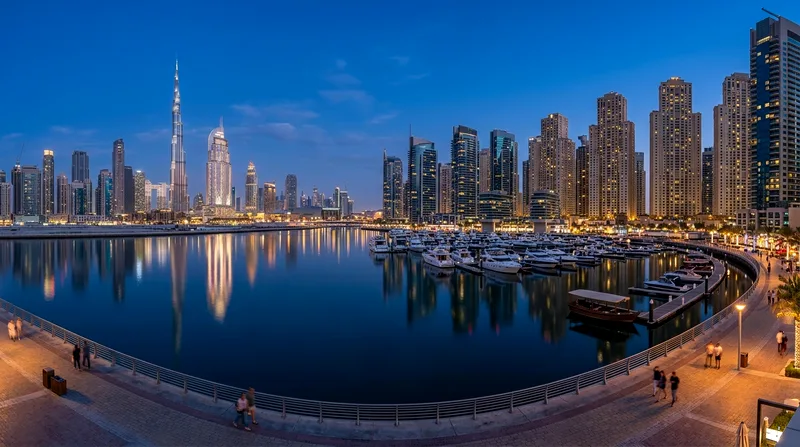
Not every part of Dubai works on foot. Dubai Marina looks walkable on a map but the promenade stretches for kilometers with little shade — fine for an evening stroll, exhausting as a guided tour in daylight. Stick to the districts actually built at human scale.
Al Fahidi Historical District
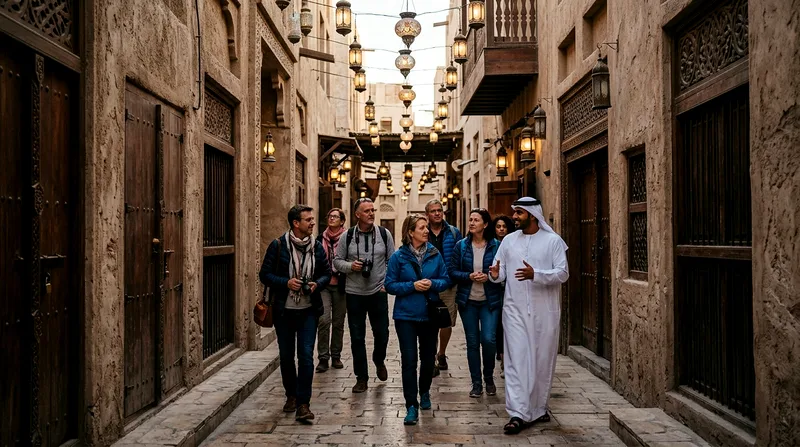
This is the core of almost every Dubai Old Town walking tour, and for good reason. Al Fahidi Historical Neighborhood packs wind-tower houses, art galleries, small museums, and a working traditional souk into a compact grid you can walk fully in under an hour — tours usually stretch it to 90 minutes with stops. Compare this to Sharjah's Heritage Area, which is larger and more museum-dense but less atmospheric, since Al Fahidi still has functioning cafes and galleries tucked into the old buildings rather than everything converted into formal exhibits. Go in the morning; by early afternoon the lanes get crowded with tour groups overlapping each other.
Dubai Creek and Old Town
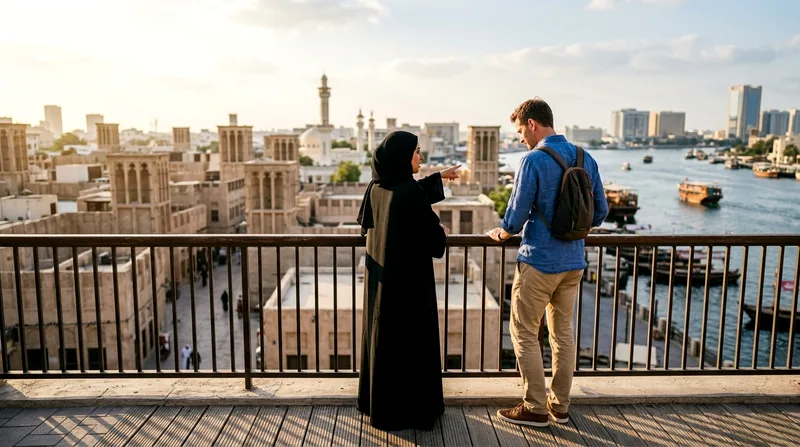
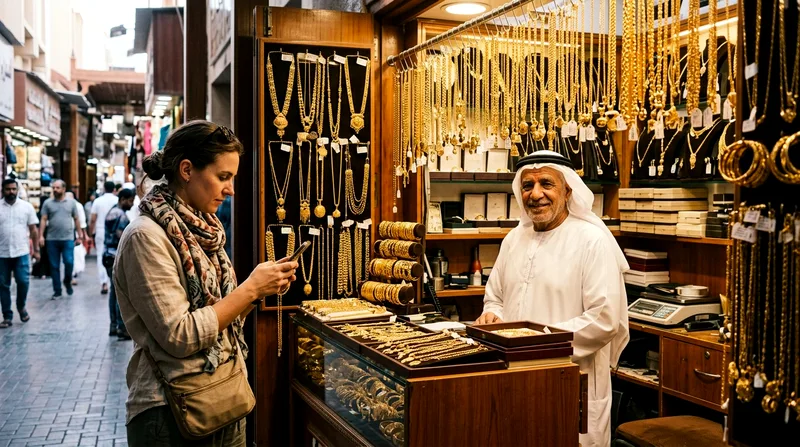
A guided walk along Dubai Creek typically pairs the Al Fahidi district with a crossing on a traditional abra boat to the Deira side, where the spice souk and gold souk sit a short walk apart. This combination works well because it mixes walking with a restful boat segment — useful if you're pacing an older traveler or just want a break from the heat. The Creek side is less polished than Downtown, with genuine wear and working trade still happening, which some travelers love and others find underwhelming after seeing glossier souks in Doha's Souq Waqif. It's worth doing anyway for the contrast with Downtown's new-build mega-architecture just a few kilometers away.
When to Book Your Dubai Walk
Timing matters more for walking tours than for almost any other Dubai activity, because you're fully exposed to the climate for the tour's full duration.
Seasonal weather considerations
November through March is the realistic window for comfortable daytime walking, with temperatures typically in the low-to-mid 20s°C. April and October are workable if you book early morning slots. From June through September, daytime walking tours are genuinely unpleasant — midday heat regularly passes 40°C with high humidity near the Creek — and most operators shift to evening departures or pause certain routes. If you're visiting in summer, book an evening Downtown Dubai walking tour instead of a daytime Old Town one; the lanes in Al Fahidi offer some shade but not enough to make a July afternoon tolerable.
Advance booking recommendations
Peak season (December through February) sees the most group tour departures but also the fullest groups, so book 3 to 5 days ahead if you want a specific time slot, earlier around New Year and school holidays. Private tours need less advance notice generally, but still book at least 48 hours out so the operator can confirm a guide. Free walking tours are the hardest to pin down — some only run on certain weekdays — so check the current schedule directly rather than assuming daily departures like you'd find with free tours in Vienna or Prague.
Frequently asked questions
What are the best walking tours in Dubai?
The strongest options combine Al Fahidi Historical Neighborhood with a Dubai Creek abra crossing and a stop at the spice or gold souk — this pairing covers the most historical ground in under three hours. A separate Downtown Dubai walking tour covering the Burj Khalifa base, Dubai Fountain, and Souk Al Bahar suits travelers who want modern Dubai on foot rather than heritage.
Are there free walking tours in Dubai?
Yes, tip-based free walking tours run in Al Fahidi and parts of Old Dubai, but departures are less frequent and less predictable than free tours in European cities like Berlin or Lisbon. Check the specific schedule before planning your day around one, and bring cash for tipping — AED 20-30 per person is a reasonable guide tip if you were satisfied.
How long do Dubai walking tours typically last?
Most guided group tours run 1.5 to 2.5 hours covering 2 to 4 kilometers. Private tours can extend to 3 hours or more since pace is negotiable. Self-guided walks through Al Fahidi alone can take under an hour if you skip the museum and galleries.
What neighborhoods are best for walking in Dubai?
Al Fahidi Historical Neighborhood and the Dubai Creek waterfront are the two strongest districts for guided walking, both compact and partially shaded. Downtown Dubai works well for an evening walk around the fountain and Burj Khalifa base. Avoid treating Dubai Marina or Jumeirah Beach Residence as walking-tour territory — they're better for a relaxed stroll than a structured guided route.
Is Dubai walking-friendly for seniors and solo travelers?
Within the right districts, yes. Al Fahidi and the Creek area have flat, mostly shaded paths manageable for seniors with reasonable mobility, and solo travelers generally find group walking tours an easy, low-pressure way to meet other visitors. The wider city, though, is car-dependent and poorly suited to spontaneous walking between neighborhoods — stick to planned routes rather than winging it on foot.