Book a Dubai Creek dhow cruise for an authentic heritage experience. Find tickets, departure times, dining options, and live entertainment on traditional boats.
What is a Dubai Creek dhow cruise?
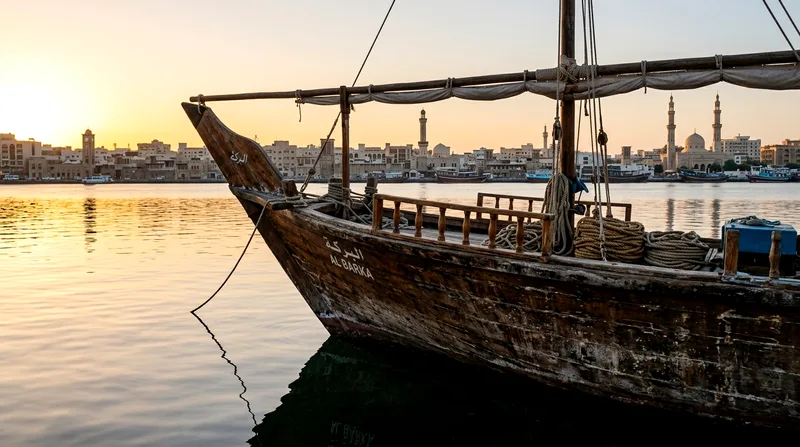
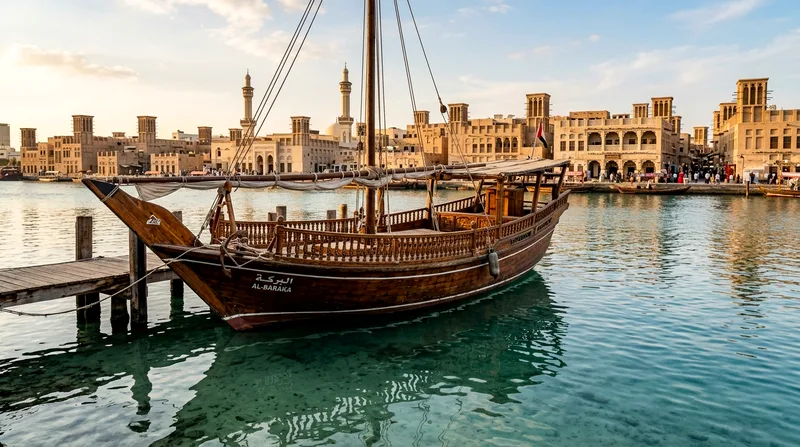
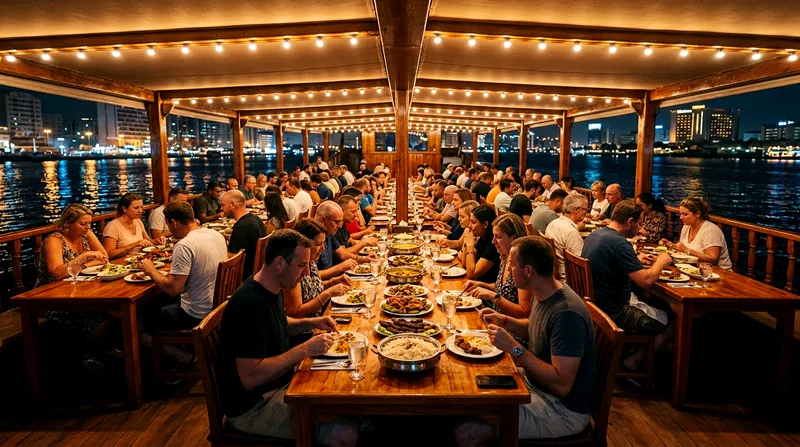
A Dubai Creek dhow cruise is a slow boat ride along the saltwater inlet that splits the city into Deira and Bur Dubai — the original heart of Dubai, long before Downtown or the Marina existed. The boats are wooden dhows, the same general design Gulf traders used for centuries to move pearls, textiles and spices between Arabia, India and East Africa. Today those hulls carry tourists instead of cargo, fitted with rows of dining tables, a small stage, and strings of lights that make the creek look better at night than it does at noon.
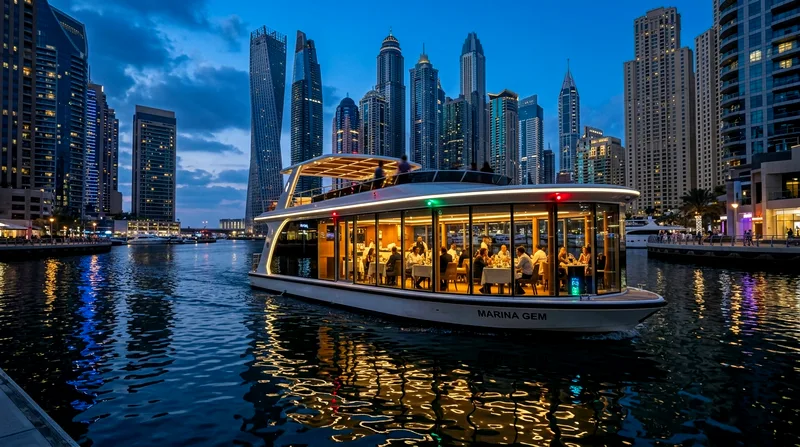
This is not the same experience as a Dubai Marina dinner cruise, and it's worth being honest about that upfront. The Marina route shows you glass towers, the Burj Al Arab from a distance, and a flashier boat. The Creek route shows you abra (water taxi) traffic, the Gold Souk waterfront, old wind-tower buildings, and the contrast between Deira's dense trading district and Bur Dubai's quieter heritage area. If you want skyline drama, go to the Marina. If you want a sense of why Dubai exists where it does, the Creek is the better choice.
Cruises typically run 1 to 2 hours, covering a round trip of a few kilometers up and down the creek between the Maktoum Bridge and Al Garhoud Bridge area, sometimes extending slightly further depending on the operator.
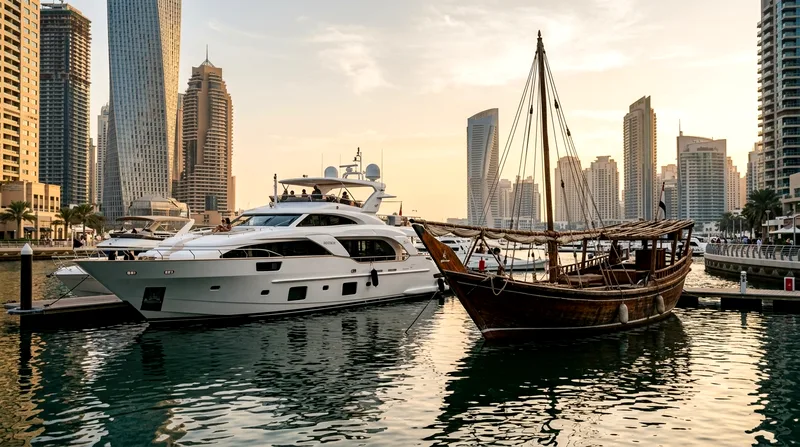
Traditional dhow boats and heritage
The dhows used for cruises are built in the same style as the working boats still moored along the Deira creekside — you can walk past active cargo dhows loading sacks of rice and electronics bound for Iran and Somalia before or after your cruise, which is honestly one of the more underrated free sights in the city. Modern tourist dhows keep the wooden hull and carved detailing but add air conditioning on the lower deck, an open-air upper deck, and enough structural reinforcement to carry 80-150 passengers depending on the vessel size. Don't expect museum-grade authenticity; do expect a boat that visually and functionally echoes what's been sailing this water for generations.
What to expect onboard
Boarding usually happens 30-45 minutes before departure, with seating mostly at long shared tables — this isn't a private, intimate setup, so if you want a quiet two-person dinner, a dhow cruise isn't it. Expect a buffet line, a stage area for entertainment, and a slow cruising pace rather than any sense of speed. The upper deck is where most people end up for photos as you pass under Maktoum Bridge or alongside the Gold Souk waterfront, lit up after dark. Toilets and air conditioning are standard on the lower deck; if it's July or August, you'll likely spend more time there than on the open deck, since Dubai creek-side humidity in summer can be intense even in the evening.
How to visit: independent vs. guided tours
You have two real options here, and they're not really comparable — one is a cruise, the other is just walking around the creek for free.
A booked dhow cruise costs far more than a self-guided abra crossing but adds dinner, entertainment, and a longer time on the water.
Dubai Creek dhow cruise vs. self-guided abra ride: cost, duration and what you get
| Option | Typical cost (AED) | Duration | What's included | Best for |
|---|---|---|---|---|
| Standard buffet dhow cruise | 80-180 per adult | 1.5-2 hours | Buffet dinner, live show, seating | Couples, families, first-time visitors |
| Premium/small-group dhow | 200-300+ | 1.5-2 hours | Buffet or upgraded menu, fewer passengers | Couples wanting more space |
| Self-guided abra crossing | 1-2 | 5-10 minutes | Transport only, no food or show | Solo travelers, tight budgets |
| Daytime/sunset dhow cruise | 60-150 | 1-1.5 hours | Light refreshments, harbor views | Senior travelers, photographers |
Prices as of 2024-2025, approximate and subject to seasonal change; check current rates when booking.
Self-guided creek exploration
If you just want to see Dubai Creek without paying for a cruise, take an abra — the small traditional water taxi — between Deira and Bur Dubai. It costs around AED 1-2 (roughly $0.30-0.50) for a five-minute crossing and runs continuously from early morning until close to midnight. You get the same water, the same views of the Gold Souk and Spice Souk waterfronts, and zero dining or entertainment, for a fraction of the price. This is the move for solo travelers or anyone on a tight budget who mainly wants the view and the atmosphere rather than a seated meal experience. The trade-off is obvious: no buffet, no Tanoura show, no extended cruising — just a quick crossing.
Organized cruise packages
A booked dhow cruise is the right call if you want dinner, live entertainment, and a longer, more comfortable time on the water without planning logistics yourself. Packages are generally sold as fixed-departure group cruises — you show up at a set boarding point, board with everyone else booked that evening, and the dhow leaves roughly on schedule rather than waiting around. Some operators offer smaller "VIP" or semi-private dhows with fewer passengers and slightly better food, at a higher price point; these are worth it for couples or small groups who found the standard buffet cruise too crowded on a previous visit, but for a first-timer the standard cruise is perfectly fine.
Tickets, pricing and booking
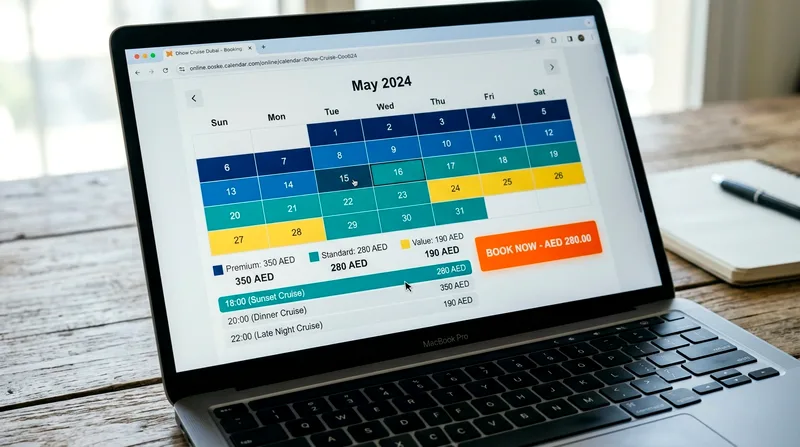
Standard Dubai Creek dhow dinner cruises are generally priced in the AED 80-180 (roughly $22-50) range per adult for a shared buffet cruise with entertainment, with children usually discounted around 20-50%. Premium or smaller-capacity dhows, and cruises bundled with hotel transfers, push toward AED 200-300+. These figures move with season and operator, so treat them as a general band, not a quote — check current prices when booking since promotions and seasonal rates shift often.
Ticket types and inclusions
Most tickets fall into three tiers: a basic cruise-only or cruise-plus-soft-drinks ticket, a standard buffet dinner cruise with live entertainment, and a premium package that adds hotel pickup/drop-off and sometimes alcohol (relevant since Dubai Creek dhows, unlike some Marina operators, don't always serve alcohol — check this specifically if it matters to you). Confirm whether transfers are included; if not, you'll need to arrange your own taxi or Metro trip to the Deira boarding point, which is usually a short walk from Al Ras or Baniyas Square Metro stations.
Booking platforms and operators
Third-party platforms like Viator, Headout, and TripAdvisor Experiences list multiple Dubai Creek dhow cruise operators side by side, which makes comparing inclusions and departure times easier than hunting down individual operator websites. These platforms also tend to have clearer cancellation policies — typically free cancellation up to 24 hours before departure — than booking directly at a kiosk near the creek. Booking a day or two ahead is usually enough outside peak season (December-February); during that period, and around New Year's Eve especially, book at least a week out, since the sunset slots sell out first.
Best times to cruise
Timing affects this experience more than most Dubai activities, mainly because of heat and light.
Seasonal weather and comfort
November through March is the comfortable window, with evening temperatures typically in the 18-24°C range — pleasant enough to actually sit on the open upper deck for the whole cruise. June through September evening temperatures often stay above 35°C with heavy humidity off the water, which pushes most passengers to the air-conditioned lower deck anyway, undercutting the point of an open-air heritage cruise. If you're traveling in summer, go anyway if it's your only window, but set expectations accordingly.
Evening vs. daytime cruises
Evening departures, usually around 8 or 8:30 PM, are far more common and arguably the better choice — the creek-front buildings and Gold Souk waterfront are lit up, and you get the dinner-and-show package. Daytime or sunset cruises exist with some operators and show you Deira's working dhow harbor more clearly, which has its own appeal if you care more about maritime heritage than nightlife. There's no dinner buffet drama competing for your attention at 4 PM, either, which some travelers — particularly older visitors or those with young kids — find easier to manage.
Nearby attractions and add-ons
The Deira side of the creek rewards arriving an hour early rather than rushing straight to the boat.
Deira landmarks and souks
The Gold Souk and Spice Souk sit a 10-15 minute walk from most Deira boarding points and are open until around 10 PM most evenings, making a pre-cruise wander an easy add-on. The Gold Souk is worth it even if you're not buying — the sheer density of jewelry shops under one covered market is distinctive, and nowhere else in the city replicates it, not even the souks in Sharjah or Abu Dhabi's older districts. The Spice Souk is smaller and more aroma than spectacle, good for 15 minutes rather than an hour.
Combination packages
Some booking platforms bundle the dhow cruise with a Burj Khalifa ticket, a desert safari, or a Dubai Museum / Al Fahidi Historic District walking tour earlier the same day — a reasonable way to compress a heritage-focused day if you're only in Dubai for a short stopover between flights. Compare these bundles carefully against booking each piece separately; bundled pricing isn't always cheaper, and locking three activities into one day can feel rushed, especially for families with young kids or senior travelers who prefer a slower pace. If your trip also includes Abu Dhabi or Sharjah, note that both have their own creek and corniche cruises, generally quieter and less commercialized than Dubai's, but with far fewer departure times to choose from.
Frequently asked questions
How much does a Dubai Creek dhow cruise cost?
Standard buffet dinner cruises typically run AED 80-180 (about $22-50) per adult, with children usually discounted 20-50%. Premium or smaller-capacity dhows with better food and fewer passengers run AED 200-300 or more. Prices shift by season and operator, so compare current listings on platforms like Viator or Headout before booking rather than relying on a fixed figure.
What is included in a dhow cruise ticket?
Most standard tickets include the cruise itself, a buffet dinner, and a live entertainment segment such as a Tanoura show. Soft drinks are usually included; alcohol often isn't, unlike some Marina cruises, so check the listing if that matters. Hotel transfers are typically an add-on, not a default inclusion — confirm before assuming you'll be picked up.
How long does the cruise last?
Most Dubai Creek dhow cruises run 1.5 to 2 hours, covering a round trip of a few kilometers between roughly the Maktoum Bridge and Al Garhoud Bridge area. Daytime or sunset cruises can be shorter, around 1 to 1.5 hours, since they skip the full dinner-and-show format.
What entertainment is provided onboard?
The most common act is a Tanoura show — a spinning folkloric dance performed in a brightly colored skirt that lights up under the dhow's deck lighting. Some cruises add a singer, a belly dance performance, or recorded Arabic music between acts. Entertainment is usually a 15-20 minute segment mid-cruise, not continuous throughout.
What food and beverages are served?
Expect a buffet with Arabian cuisine — grilled meats, hummus, mixed salads, rice dishes, and a dessert table with items like baklava or Umm Ali. It's casual self-service, not fine dining, and quality varies noticeably between operators, so check recent traveler reviews on TripAdvisor before picking a specific cruise if food quality matters to you.